
Light Illuminates the Campus: When Plant Factories Become "Interdisciplinary Classrooms"
Recently, the Wuxi Academy of Educational Sciences announced the list of high-quality courses for science education, engineering education, and artificial intelligence education in primary and secondary schools in Wuxi for 2025. Meili Middle School in Wuxi's "Light Chip Farm: System Engineering Practice in Plant Factories" was successfully selected, achieving municipal-level project approval!
Meili Middle School in Wuxi stated that "Light Chip Farm: System Engineering Practice in Plant Factories" features "light" as the core driver and "chip-level" precise control, cultivating students' systematic cognitive framework in the fields of science and engineering, becoming innovators with basic engineering literacy and scientific inquiry abilities.
The project focuses on engineering practice, integrating multidisciplinary knowledge from physics, chemistry, biology, and information technology, strengthening students' interdisciplinary application abilities and systems thinking, serving as empirical evidence of the school's achievements in engineering education construction.
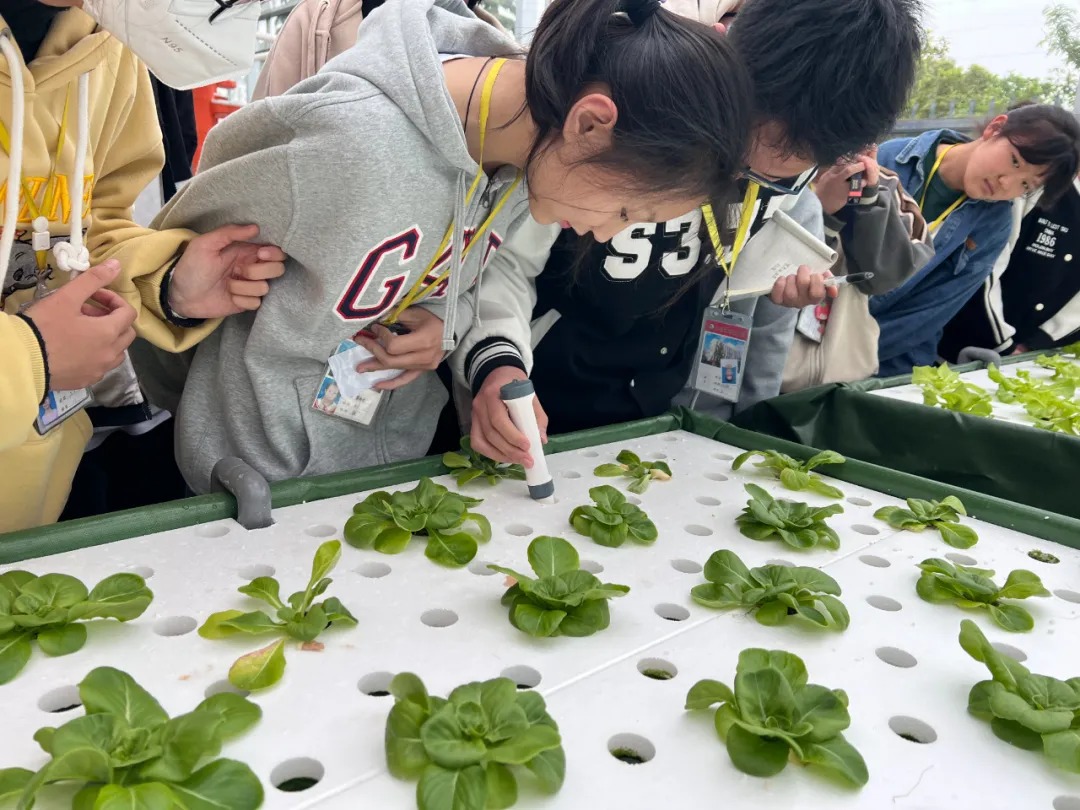
(Image source: Wuxi Meili Middle School)
This precisely embodies the educational value of plant factories. As a highly efficient system that intelligently controls environmental conditions such as temperature, humidity, light, CO₂ concentration, and nutrient solution, the plant factory itself is an excellent practical platform for the integration of multidisciplinary knowledge.
This hits precisely the pain points of traditional subject-based education; it provides a real, complex, and fascinating "interdisciplinary hub." When knowledge no longer lies isolated in textbooks but serves to jointly safeguard the optimal growth of a plant, systems thinking and engineering literacy for solving real-world problems quietly take root and sprout in this "LightCore Farm."
在这里,学生需要思考:为何不同的光质会影响植物形态?营养液成分该如何精准调配?传感器数据如何联动控制环境?当孩子们在"光芯农场"中调试LED光谱,在智能控制终端前设定光照周期,他们不仅在学习知识,更在亲身体验未来农业的构建。
Educational Significance: Beyond Planting
Plant factories enter campuses, with educational significance far exceeding traditional planting activities:
1. Interdisciplinary learning platform: Students need to comprehensively apply knowledge from multiple disciplines such as physics (light control), chemistry (nutrient solution formulation), biology (plant growth patterns), and information technology (intelligent control systems), truly achieving the integrated application of knowledge.
2. Cultivation of engineering thinking: From system design and parameter adjustment to problem-solving, students personally experience the complete engineering practice process. For example, students at the Fengtai Experimental School affiliated with Beijing Institute of Education assembled and built small-scale plant factory frameworks by hand, "moving" high-tech cultivation from the laboratory to the park.
3. Scientific inquiry skills: Through continuous observation, comparison, analysis, tracking, recording, and research, students independently raise questions, identify problems, and solve them. In the "Exploring Plant Factories" course at Nanjing Normal University Affiliated Xianlin School, students planted vegetables such as cucumbers and tomatoes in groups, performing high-tech operations throughout, recording experimental data, analyzing and solving problems.
4. Understanding of future agriculture: Allowing students to intuitively perceive the leap from "experience-based cultivation" to "smart agriculture", understanding how modern agriculture uses data systems to "direct" plant growth
Among them, LED artificial light source technology is a key technology for plant factories. Bringing plant factories into campuses not only helps students understand the relationship between light and plants but also allows them to personally participate in spectrum regulation experiments. For example, in some school courses, students build their own LED plant growth lights, conduct chlorophyll extraction experiments, and deepen their understanding of plant photosynthesis and chlorophyll absorption spectrum through practice.
Industry Opportunities in Agricultural Lighting
In addition to Wuxi Meili Middle School, several schools across China are exploring the educational applications of plant factories. For instance, Yunxing Primary School in Xuzhou, Jiangsu Province, implemented the "IoT + Plant Factory" project, where students use sensors to obtain real-time plant growth information and perform intelligent control; Shanghai Jiao Tong University upgraded its "Balcony Garden" into a modular plant factory, creating a new model of collaborative teamwork for creative labor education... Bringing plant factories into campuses is not only an innovation in educational methods but also a vivid practice of the deep integration of agricultural lighting technology and education.
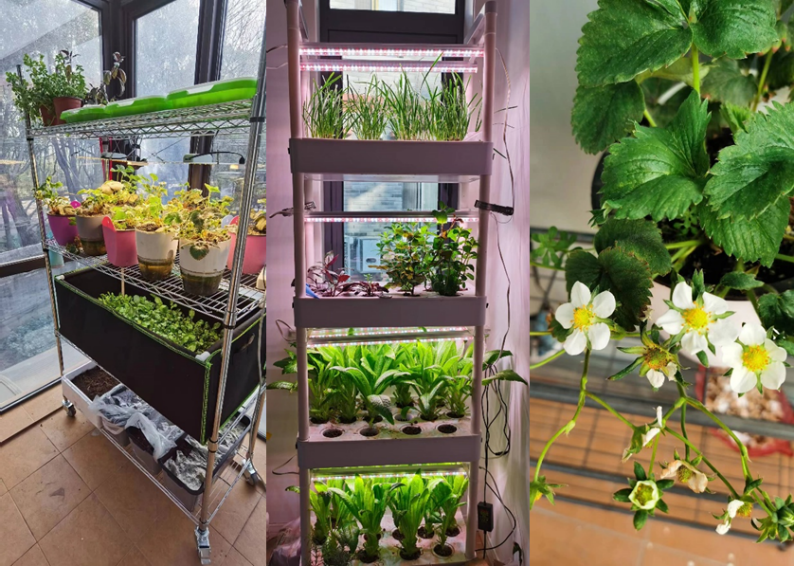
(Image source: Shanghai Jiao Tong University)
Bringing plant factories into campuses has brought new development opportunities to the agricultural lighting industry. Campus plant factories require lighting solutions suitable for teaching scenarios, which opens up new application areas for LED plant growth light companies and may also become a testing ground and application showcase window for new technologies and products. At the same time, the popularization of plant factories on campuses will inevitably cultivate a new generation of talents who understand both agriculture and technology, injecting continuous innovative vitality into the development of smart agriculture.