
Insights for the Industry: From "Proposing the Adaptive Luminous Efficacy Concept" to "Legislation on Light Pollution Prevention"
1 YiYong Optoelectronics Pioneered the "Scenario Luminous Efficacy Theory"
Which Industry Perceptions Were Disrupted?
The concept of "Adaptive Luminous Efficacy" proposed by Shanghai YiYong Optoelectronics Technology Co., Ltd., along with its industry practices, related technological breakthroughs, and promotion of industry standards, has brought profound insights to the development of the lighting industry. It is not merely a technological upgrade, but a paradigm shift from "manufacturing mindset" to "service mindset," and from "parameter competition" to "scenario value."
The following are the six core insights of the "Adaptive Luminous Efficacy Scenario Theory" for the development of the lighting industry:
1. Reconstruction of the value dimension: shifting from "Luminous Efficacy Only" to "Effective Luminous Efficacy"
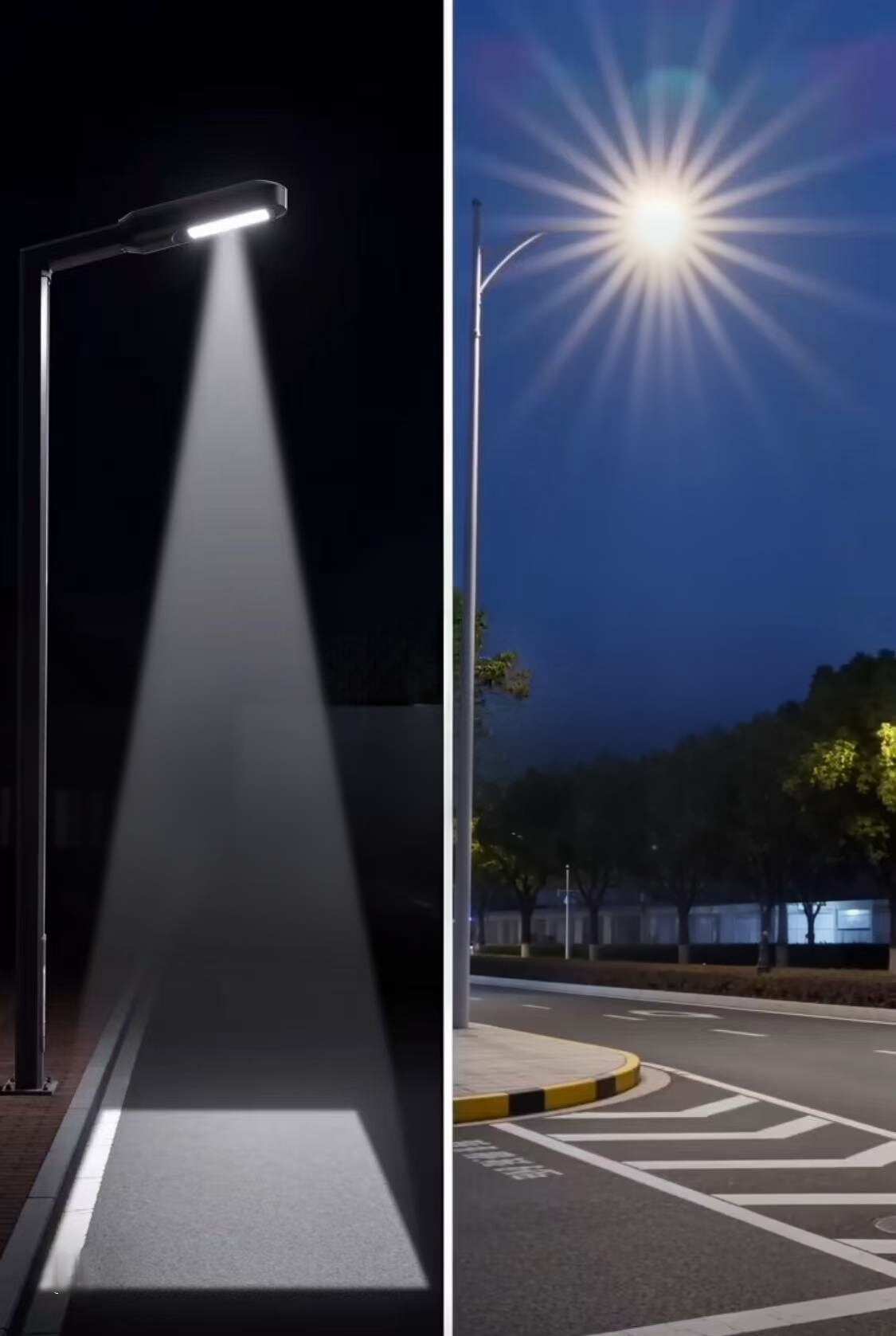
Traditional misconception: In the past, the industry was overly obsessed with competing on a single metric in laboratory environments (such as pursuing 200 lm/W or even higher), ignoring the distribution and utilization rate of light in practical applications. If high-efficacy luminaires have unreasonable light distribution, a large amount of light is projected into the sky or ineffective areas, which is actually a huge waste of energy and a source of light pollution.
Industry insight: "Good light" does not mean "strong light," but rather "the right light." The evaluation criteria must shift from simple source luminous efficacy (lm/W) to system luminous efficacy utilization. The core indicator should be defined as: minimum energy consumption under the premise of meeting specific scenario requirements (illuminance, uniformity, comfort). Enterprises need to abandon the "material stacking" mindset and instead pursue "precise light projection," ensuring that every lumen produces actual value.
2. Upgrading of technical paths: shifting from "single-point breakthrough" to "system integration"
Traditional Limitations: Traditional lighting technologies mainly focus on improving single hardware points such as chip luminous efficacy and LED driver efficiency.
Industry Insights: Future lighting is a systems engineering project combining "optics + electronics + algorithms + sensing". Optical design is core: As demonstrated by YiYong Optoelectronics' "reflective asymmetric secondary light distribution" technology, controlling spill light through physical optical design saves energy more directly than simply improving chip efficiency. Intelligent control is the soul: It must integrate IoT, AI algorithms, and sensors to achieve "light on demand" (dimming in the time dimension, light control in the space dimension). Cross-industry integration: Lighting companies must possess software-hardware integration capabilities and deeply merge with communications, big data, and artificial intelligence fields.
3. Transformation of Business Models: From "Selling Products" to "Selling Services/Results"
Traditional Model: One-time sale of luminaires, profiting from hardware price differences, disconnected from the customer's subsequent operations.
行业启示:“照明即服务(LaaS)"将成为主流。按效付费:商业模式可转变为基于节能效果的合同能源管理(EMC),或按“有效照度/舒适环境”订阅收费。数据增值:照明系统成为城市感知的神经末梢,产生的能耗数据、人流数据、环境数据将成为新的资产,为智慧城市运营提供决策支持。全生命周期价值:竞争焦点从“采购成本”转移到“全生命周期成本",长寿命、低维护、低能耗的产品将更具竞争力。
4. Social Responsibility and Compliance: Shifting from "Passive Governance" to "Proactive Defense"
Traditional Pain Points: Light pollution (artificial daylight, glare, ecological interference) is becoming increasingly severe, leading to frequent complaints and even legal risks (such as the Light Pollution Prevention and Control Regulations issued in Shanghai in 2022).
Industry Insights: Light control capability is the future enterprise's "license to survive." "Adaptive luminous efficacy" emphasizes suppressing spill light, directly solving the problem of light pollution at the source. Enterprises with precise light control capabilities will help clients avoid policy risks, aligning with the "dual carbon" goals and green city construction requirements. Healthy lighting (Human centric lighting (HCL)) will become standard, focusing on the impact of light on human circadian rhythm, emotions, and health.
5. Industry Barriers and Landscape: Shifting from "Price War" to "Technology and Standards War"
Current Status: Excess low-end production capacity, serious homogenization, and trapped in vicious price competition.
Industry Insights: Technical barriers and the power to set standards determine influence. Rising Thresholds: Meeting luminous efficacy requirements demands complex optical design capabilities, algorithm development skills, and system integration abilities, which will accelerate the elimination of small workshops lacking core technologies. Standard Leadership: Whoever defines the testing standards and evaluation systems for "adaptive luminous efficacy" (such as Yiyong Optoelectronics participating in setting industry standards) will hold market dominance. New Entrants: ICT giants and AI companies may cross over into the sector; traditional lighting enterprises face disruptive competition if they fail to transform.
6. Return to Design Philosophy: Shifting from "Lamp-Centric" to "Human-Centric"
Traditional Thinking: Design primarily considers easy installation of the luminaire, low cost, and attractive parameters.
Industry Insights: Scenario needs are the sole starting point for design. Different scenarios (roads, tunnels, offices, hospitals, schools) require completely different light environment solutions. Design must deeply analyze human behavior patterns, visual psychology, and physiological needs to achieve true "personalized lighting for every person and every scene." As stated in the Xinhua News Agency article "Does Rolling Out Energy Saving Mean More Energy Saving?": Light should "illuminate where it should be bright and darken where it should be dark," returning to the essence of lighting serving people.
The greatest insight Yiyong Optoelectronics' "Adaptive Luminous Efficacy Scenario Theory" offers the industry is: The second half of the lighting industry is no longer about competing on who makes the brighter light bulb, but on who can驾驭 light more intelligently, precisely, and humanely. This is a transformation from extensive growth to refined operations. For enterprises, only by mastering core technologies for precise light distribution, building intelligent control systems, and deeply cultivating segmented scenario needs can they win future market influence against the backdrop of the "Dual Carbon" era and light pollution governance.
II Light pollution legislation drives corporate innovation
Provides legal safeguards
This year, the Two Sessions passed the "Ecological Environment Code of the People's Republic of China". The specific provisions of Chapter 36 "Prevention and Control of Light Pollution" (Articles 667 to 673) strongly support Sanan Optoelectronics' "Adaptive Luminous Efficacy Scenario Theory". We can clearly see that this theory is not only a direction for corporate technological innovation, but also a core solution that directly responds to the latest national legislative requirements and addresses the pain points of legal implementation.
Below are the specific implications and corresponding relationships of the Code's provisions for the "Adaptive Luminous Efficacy Scenario Theory" and the development of the lighting industry:
1. From "Definition Compliance" to "Precise Light Control": A Technical Imperative
Legal Basis: Article 667 explicitly defines light pollution as "excessive or inappropriate use of artificial lighting... causing visual interference." Article 671 requires that advertising screens, road lighting, etc., must be "reasonably designed and installed... with effective measures taken."
Industry Insight: "Inappropriate" implies legal risk: Previously, compliance with brightness standards was sufficient; now, if the light projection angle is incorrect (e.g., shining into residents' windows or causing glare for drivers), it may be deemed "inappropriate use" and constitute a violation, even if brightness levels are not exceeded. Core Value of Adaptive Efficacy: The "asymmetric light distribution" and "cut-off design" emphasized by Sanan Optoelectronics are precisely aimed at solving the problem of "inappropriateness." Future luminaires must possess strict beam angle control capabilities to ensure that "light only goes where it should," physically eliminating spill light and glare, which is the baseline requirement to meet the legal definition.
2. Standardization of "Light Limits" Drives Product Technology Upgrades
Legal Basis: Article 670 explicitly stipulates that technical specifications must prescribe "reasonable light limits," covering lighting products, outdoor displays, traffic fill lights, building glass, etc.
Industry Insight: Failure of Single Indicators: Future product access will no longer depend solely on total luminous flux or source efficiency, but will assess multi-dimensional indicators such as vertical illuminance, upward light output ratio (ULOR), glare rating (UGR), and flicker frequency. Customization Becomes the Norm: Different areas (e.g., residential vs. commercial zones) will have different light limit standards. Companies need to provide scenario-based "adaptive" solutions, as advocated by Sanan Optoelectronics, rather than "one-size-fits-all" generic products. For example, luminaires for residential areas must have stricter cut-off light distributions.
3. Establishing a full lifecycle management mindset through "planning first"
Legal basis: Article 669 requires that "light pollution impacts" be "fully considered" and "comprehensively planned" during the initial stages of territorial spatial planning and project construction. Article 673 proposes the implementation of "zoned management for light pollution prevention and control".
Industry implications: Shift intervention earlier: Lighting companies and solution providers must not only intervene during the construction phase but must participate in the planning and design phase to conduct light environment simulations and pollution assessments. Zoned differentiation strategy: The "zoned management" proposed by the code means that cities will be divided into different light environment control zones (such as dark sky protection zones, moderate lighting zones, and high-brightness commercial zones). Companies need to establish product libraries and design specifications for "adaptive luminous efficacy" tailored to different zones, helping governments and clients avoid compliance risks during the planning phase.
4. "Systematic compliance" responsibilities under multi-departmental supervision
Legal basis: Article 668 establishes a system where the ecological environment department exercises unified supervision, while housing and urban-rural development, transportation, and other departments are responsible for their respective areas.
Industry Insights: Breaking Data Silos: Due to the involvement of multiple regulatory authorities, lighting systems must have monitoring, traceability, and reporting capabilities. The Importance of Intelligent O&M: The law mentions "regular maintenance". The traditional "fix it when it breaks" model is no longer viable; IoT technology must be used to monitor light pollution indicators in real time (such as automatically reducing luminance at night or adjusting projection angles) and generate compliance reports for submission to regulatory authorities. "Adaptive luminous efficacy" must include intelligent algorithms for dynamic adjustment to cope with changes in different time periods and regulatory requirements.
5. Integrated Governance of Building Materials and Lighting
Legal Basis: Article 672 specifically addresses requirements for reflective materials such as glass curtain walls. Article 670 also includes architectural glass in light limit standards.
Industry Insights: Cross-boundary Integration: Lighting design must be deeply integrated with architectural design and curtain wall material selection. Simply optimizing luminaires is not enough; the reflection characteristics of building surfaces must also be considered. Holistic Solution: Leading enterprises in the future may need to provide comprehensive light environment consulting services combining "lighting + building materials", calculating the superimposed impact of "direct light + reflected light" to ensure the overall environment does not exceed limits.
III The Code provides for "adaptive luminous efficacy"
Legal Endorsementand Market Entry
The introduction of Chapter 36 of the Ecological Environment Code marks a new stage in China's governance of light pollution, characterized by rule of law, precision, and standardization. For companies adopting the "Adaptive Luminous Efficacy Scenario Theory," this represents not only a technical advantage but also a significant market opportunity:
1. Compliance threshold as a moat:Low-end production capacity that fails to meet the new code's requirements for "interference prevention, limit control, and zoned management" will be eliminated.
2. Explosion of the retrofit market:A large number of existing old lighting facilities (especially billboards, landscape lights, and street lights) that do not meet the requirements for "reasonable design" and "interference prevention" will face mandatory rectification, creating huge replacement demand.
3. Prominence of service value:Companies capable of providing full-chain services from "planning assessment - product design - intelligent control - compliance reporting" will become the preferred partners for governments and large projects.
Four One-sentence summary
The Code defines the "red line" for light pollution, while the "adaptive luminous efficacy scenario theory" is the only "pass" to help the industry cross this red line and achieve green, high-quality development.
Shanghai Yiying Optoelectronics Technology Co., Ltd.