
A study by Yale University in the United States indicates that nighttime lighting may increase the risk of hormone-related cancers
Lyu L. Light at night and cancer incidence: a GIS-based study in the US[D]. Yale University, 2024.
2024年,美国耶鲁大学公共卫生学院发表了一项研究——夜间光照与癌症发病率:基于美国GIS的研究。研究利用卫星夜间灯光数据与癌症发病率数据进行关联分析,发现夜间光照与激素相关癌症(例如女性乳腺癌、前列腺癌)呈正相关。研究结果与CIE PS 003:2025《干扰光与光污染立场声明》中“夜间光照会扰乱人体生物节律并造成健康风险”的内容高度一致合。
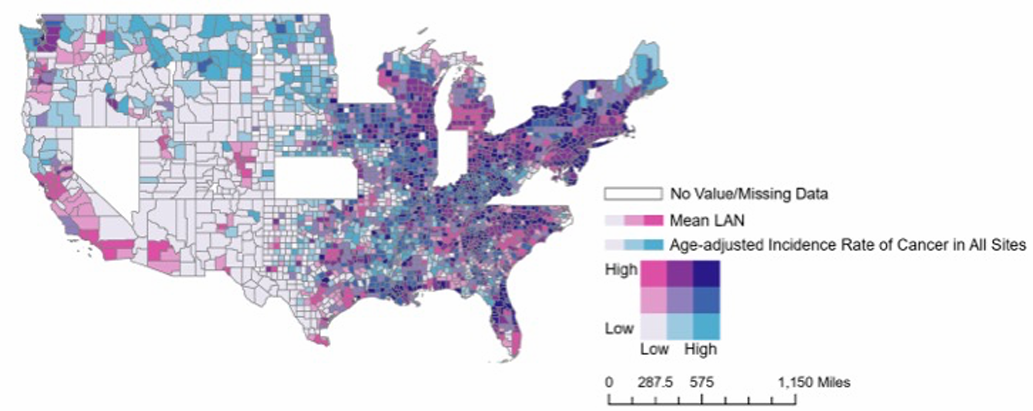
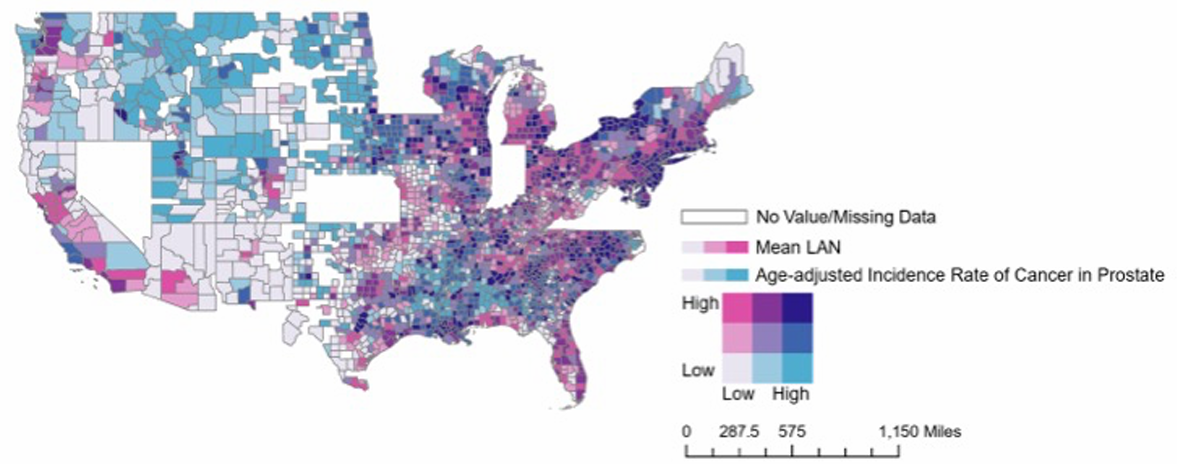
研究通过线性混合效应回归模型分析1996-2000年夜间光照(LAN)数据与2016-2020年癌症发病率的关联,发现LAN与全癌种发病率、激素相关癌症(女性乳腺癌相关系数0.42,校正后p=3.99E-13;前列腺癌相关系数0.5,校正后p=1.61E-06)呈正相关,与部分消化系统(结直肠癌、食管癌)和泌尿生殖系统癌症呈负相关,且最高LAN暴露水平的关联最显著,为后续流行病学和实验研究提供了线索。
I. What is nighttime lighting? Why does it matter?
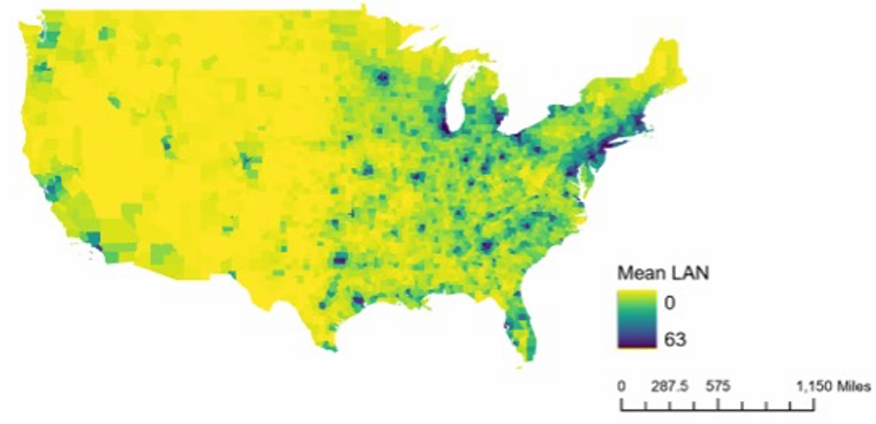
II. Data Sources and Processing
Data Type Source Key Parameters Processing Method Cancer Data CDCCancer Statistics Database 26 types of cancer, age-adjusted incidence rate (per 10 persons), covering 44 states Exclude states with non-compliant data / counties, apply log transformation standardization LANData DMSPSatellite Imagery (Version 4) 1996-2000 years, DN value ( 0-63 , higher value means stronger light) Inter-satellite calibration (formula: DN adjusted =C0+C1×DN+C2×DN²), calculating the 5-year average Confounding factors 2016-2020 years ACS survey Insurance coverage rate, poverty rate, percentage of white population, education level, population density, etc. incorporated into multivariate model adjustment
III. Nighttime Lighting and Cancer: What Are the Shocking Discoveries?
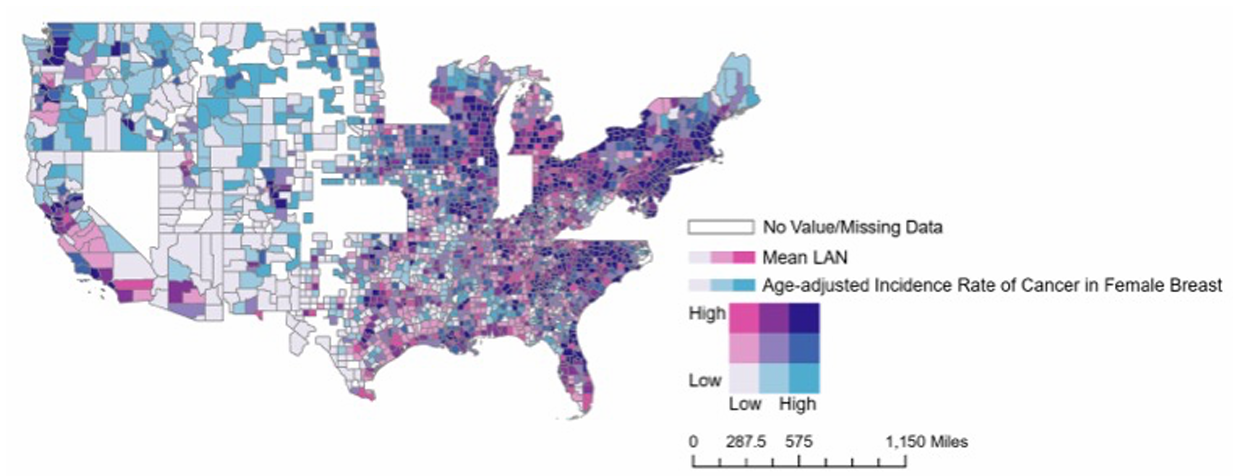
Increased risk of hormone-related cancers : For example, female breast cancer and prostate cancer are significantly positively correlated with LAN. This may be due to light disrupting hormonal balance. The figure below shows the relationship between LAN and breast cancer; incidence rates are higher in high-light areas (such as the Northeast).
Some cancer risks are actually reduced : Surprisingly, LAN is negatively correlated with digestive system cancers such as colorectal cancer and esophageal cancer. This means that in areas with strong lighting, the incidence of these cancers is lower. The reasons may be complex; for instance, regions with higher urbanization often have better medical conditions, but the specific mechanisms require further research. The figure below illustrates the negative correlation pattern between LAN and colorectal cancer.
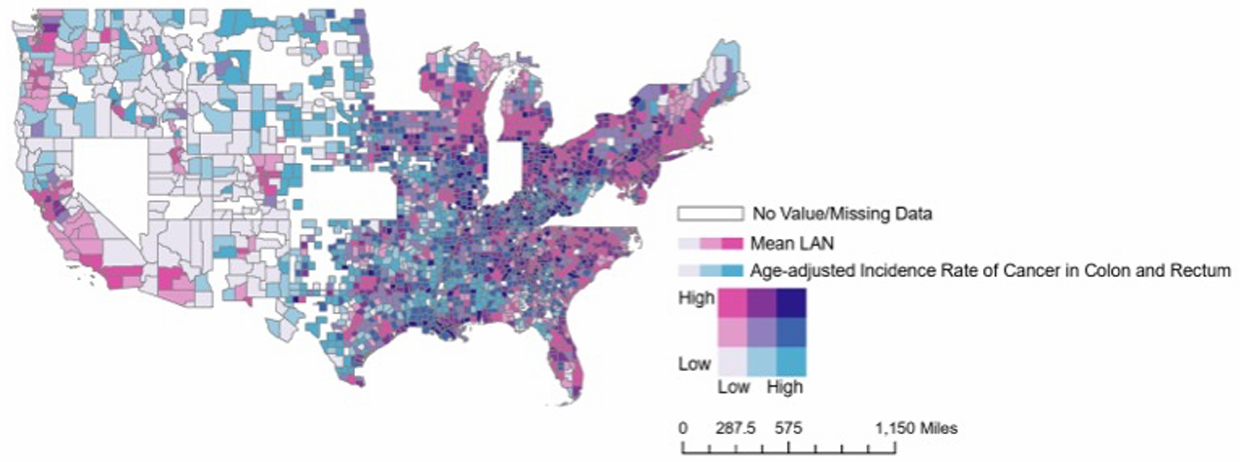
Non-Hodgkin lymphoma is also affected: LAN also shows a slight positive association with this lymphoma, suggesting that light exposure may act through the immune system.
IV. Why can nighttime lighting cause cancer? The scientific mechanism is simply explained as
The core mechanism lies in melatonin. When it is dark at night, our brain secretes melatonin, which not only aids sleep but also inhibits tumor growth. However, LAN acts like "fake daylight," deceiving the body into reducing melatonin production, thereby giving cancer cells an opportunity to thrive. Animal experiments have also confirmed that continuous light exposure accelerates tumor development. This is akin to sleeping with the lights on, preventing the body from receiving adequate repair.
V. What are the limitations of this study? What should we do?