
New national regulations take effect, ending the era of "eye-protection lamps for myopia prevention"
According to 2023 data from China's National Health Commission, the overall myopia rate among children and adolescents in China is 52.7%. This means that one in every two children has myopia . Against this backdrop, products for myopia prevention and control among adolescents have become a high-traffic business , with the market flooded by numerous products claiming to "prevent and control myopia." Among them, "eye-care lamps" have gained significant consumer attention and preference due to their frequent use in daily life.
"Eye Protection Lamp" Myth
A carefully designed marketing scam
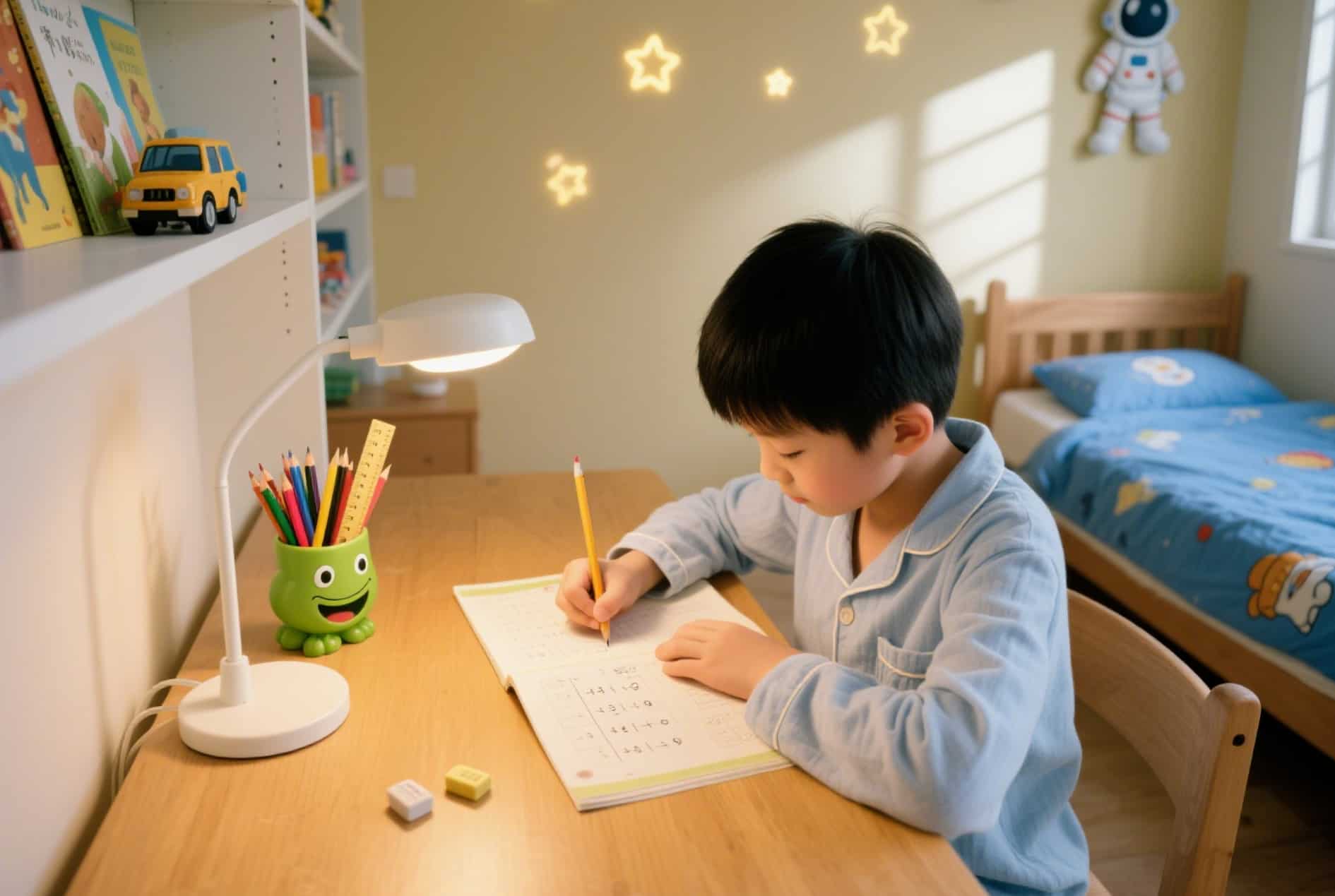
Open an e-commerce platform and search for "eye-protection lamp anti-myopia"; tens of thousands of results instantly appear, ranging from a few dozen yuan to over a thousand yuan. All are prominently marked on the page with "anti-myopia" . The product detail pages cite various "optical principles," accompanied by warm scenes of children reading attentively, implying a direct link between the products and vision protection.
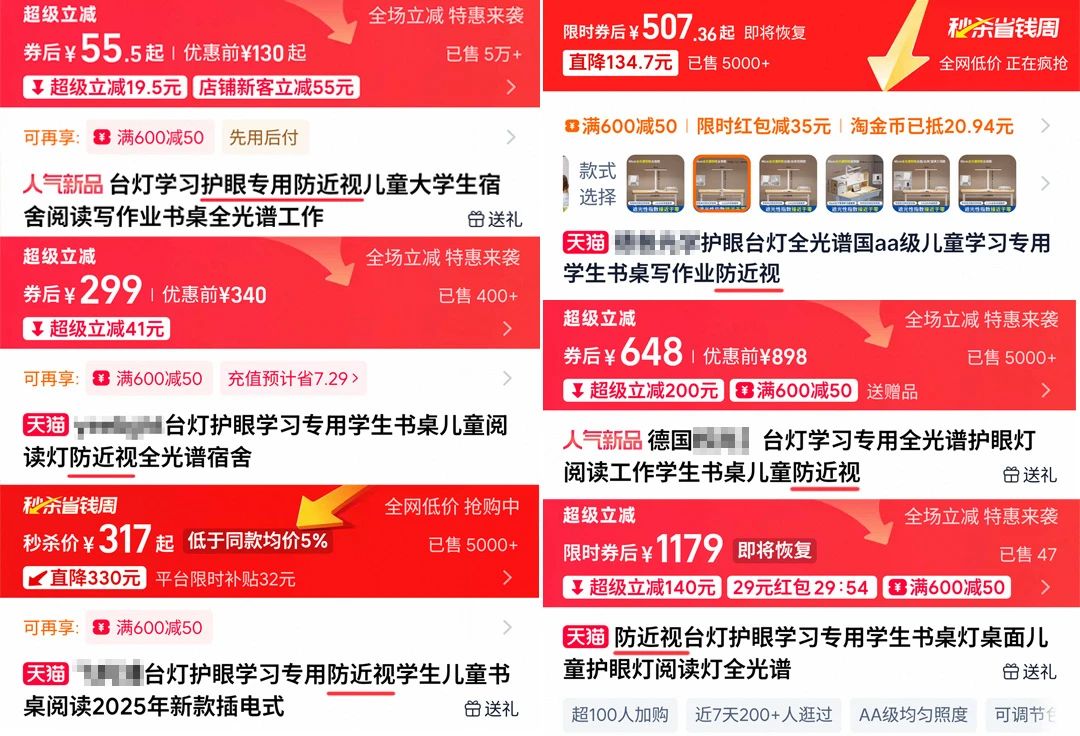
Behind these promotions lie huge market interests. According to industry data, China's eye-protection lamp market has exceeded 10 billion yuan, with an annual growth rate over 15%. "Myopia prevention" serves as the most effective premium label, easily doubling the price of ordinary LED lamps.
Some merchants exploit parents' anxiety, blurring the use of professional terminology to confuse concepts, marketing with slogans like " Customized light recipes to effectively prevent myopia ", " Red light eye protection axial control ", and " Special spectrum design to relieve eye strain and prevent myopia ". This misleading marketing causes consumers to mistakenly believe that purchasing such luminaires can effectively prevent or treat myopia.
These false claims are hiding in various poster ads and sales personnel's mouths, spreading quietly. They seriously mislead consumers, not only infringing on consumer rights but also disrupting the normal market order of the lighting industry.
New Regulations Interpretation
How does the National Medical Products Administration deconstruct borderline cases?
July 17, 2025, the National Medical Products Administration issued "Guiding Principles for Classification and Definition of Medical Devices Containing Light Sources for Myopia Control and Amblyopia Treatment" (hereinafter referred to as "Guiding Principles"). This document acts like a precise scalpel, cutting through the ambiguous gray area between ordinary lighting products and medical devices—the document clarifies classification and management requirements for medical devices containing light sources for myopia control and amblyopia treatment, sending a warning to the lighting industry: continuing to play on the edge with claims that "eye-protection lamps cure myopia" not only involves false advertising but may also cross legal red lines .
'Eye-care lamp' marketing concept ≠ medical function
The occurrence and development of myopia is the result of multiple factors acting together, including genetics, visual intensity, and outdoor activity time. Currently, there is no authoritative research proving that ordinary lighting luminaires can achieve medical effects for myopia prevention and control.
“护眼灯”只是一个市场营销概念,缺乏医疗功能的科学支持,本质上只是符合国标读写作业台灯要求、提供舒适照明的日常灯具,而非具有医疗功效的产品。
Based on product risk levels, the "Guiding Principles" classify light-source-containing myopia control and amblyopia treatment medical devices into different management categories:
Light Source Type | Purpose | Management Category | Classification Code |
|---|---|---|---|
Laser Light Source | Myopia control or amblyopia treatment | Class III | 16-05 |
Non-laser light source (e.g., LED red light) | Myopia Control | Class II | 16-03 |
Non-laser light sources (such as LED, halogen lamps, etc.) | Amblyopia treatment | Class II | 16-03 |
Regardless of whether a company names its product "eye-care lamp", "study lamp" or "reading and writing desk lamp", regardless of how much red light, purple light, or circadian spectrum is added, as long as it claims to be for lighting purposes, it must prominently display on the instruction manual, packaging, and e-commerce detail page: "Not intended for myopia prevention (including training) or amblyopia treatment (including training)."
Enterprises or merchants claiming that a product has myopia prevention and control functions must comply with medical device management requirements, including registration approval, clinical verification, etc. Otherwise, the market regulation department may investigate and punish in accordance with the law.
From the perspective of optical principles and product functionality, qualified lighting luminaires can indeed provide users with a more comfortable visual environment, reducing eye strain, through scientific spectrum design, appropriate illuminance, and color temperature; however, this is fundamentally different from "myopia prevention and control".
The carefully crafted "anti-myopia" rhetoric by merchants is merely a marketing tool that exploits the public's inability to distinguish between the medical concepts of "relieving visual fatigue" and "controlling myopia," thereby generating anxiety .
For example, one brand claims its eye-care lamp can "regulate retinal photoreceptor activity via circadian spectrum adjustment to effectively reduce myopia incidence," yet provides no clinical human trial data to support this; another brand claims "red light eye-care technology has been certified by XX institution," but upon verification, the certification is merely for "meeting lighting comfort standards" and has no direct link to myopia prevention.
This kind of 'borderline' marketing not only infringes on consumer rights but also erodes the credibility of the lighting industry—when 'eye-protection lamps' become mere marketing gimmicks, consumer trust in truly high-quality lighting products will also be undermined.

《指导原则》还明确规定,含光源的近视控制、弱视治疗类产品必须归入16眼科器械子目录,不可使用09物理治疗器械或19医用康复器械的分类编码。这一规定避免了产品分类的混乱,确保监管更加精准有效。
Some desk lamps that obtained Class II medical device certification a few years ago may engage in borderline marketing practices, blurring the lines and misleading consumers. The intended use of these lamps is only stated as " training of ciliary muscle regulatory function through dynamic changes in the lamp's [[Illuminance (lx)]] ." This does not directly establish a causal relationship proving it can prevent or control myopia.
Standardize market order and promote healthy industry development
False advertising of "eye-protection lamps" in the market not only misleads consumers but also damages the reputation of the lighting industry. The release of the "Guiding Principles" is a crucial measure to govern the chaotic myopia prevention and control market and protect consumer rights—by clarifying product classification and management requirements, it establishes clear boundaries for the market, imposes strong constraints on merchants, and ensures that only safe and effective medical devices are used for myopia control and amblyopia treatment.
对于消费者而言,这一政策有助于厘清市场认知,避免被虚假宣传误导。普通消费者常将"护眼"、“缓解视疲劳”与"防控近视"混为一谈。消费者应提高警惕,在购买“护眼灯”或类似产品时,保持理性,关注产品是否经过医疗器械注册,是否明确其预期用途。
In the future, with in-depth scientific research and improved regulatory policies, the deep integration of the lighting industry and the medical device industry is expected to bring more innovative products, providing more effective solutions for myopia prevention.
Return to essentials, focus on quality
Myopia prevention and control is a systematic project that requires the joint efforts of families, schools, medical institutions, and relevant enterprises. Lighting products, as an important part of the visual environment, derive their value from providing a comfortable and healthy visual setting, not from replacing professional medical intervention. The National Medical Products Administration's issuance of these guidelines aims to standardize market order, ensuring that products truly requiring medical intervention are properly regulated, while allowing ordinary lighting products to return to their essential functions.
Clarify product positioning: General lighting products must not claim medical efficacy; companies should cease 'borderline' marketing Enhance professional capabilities: Lighting companies can collaborate with ophthalmologists/institutions to scientifically design lighting products that comply with visual health standards; Increase science popularization efforts: Disseminate scientific knowledge about eye care to consumers through authoritative (Sales) channels, dispelling the misconception that "one lamp can cure myopia."