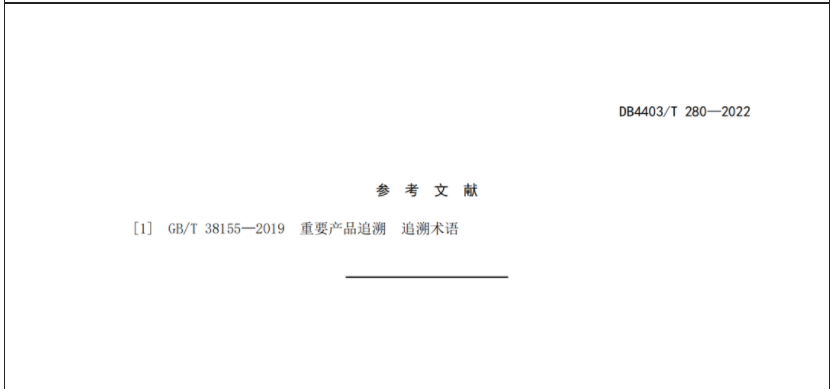
Interpretation of Shenzhen Local Standard "Technical Specification for Coding of Multi-functional Smart Pole Management System"
On December 8, the Shenzhen Market Supervision Administration issued the Announcement on Approval and Publication of Shenzhen Local Standards (No. 94 in total). Among them, DB4403/T 280-2022 "Technical Specification for Coding of Multi-functional Smart Pole Management System" was officially released and will take effect from January 1, 2023.
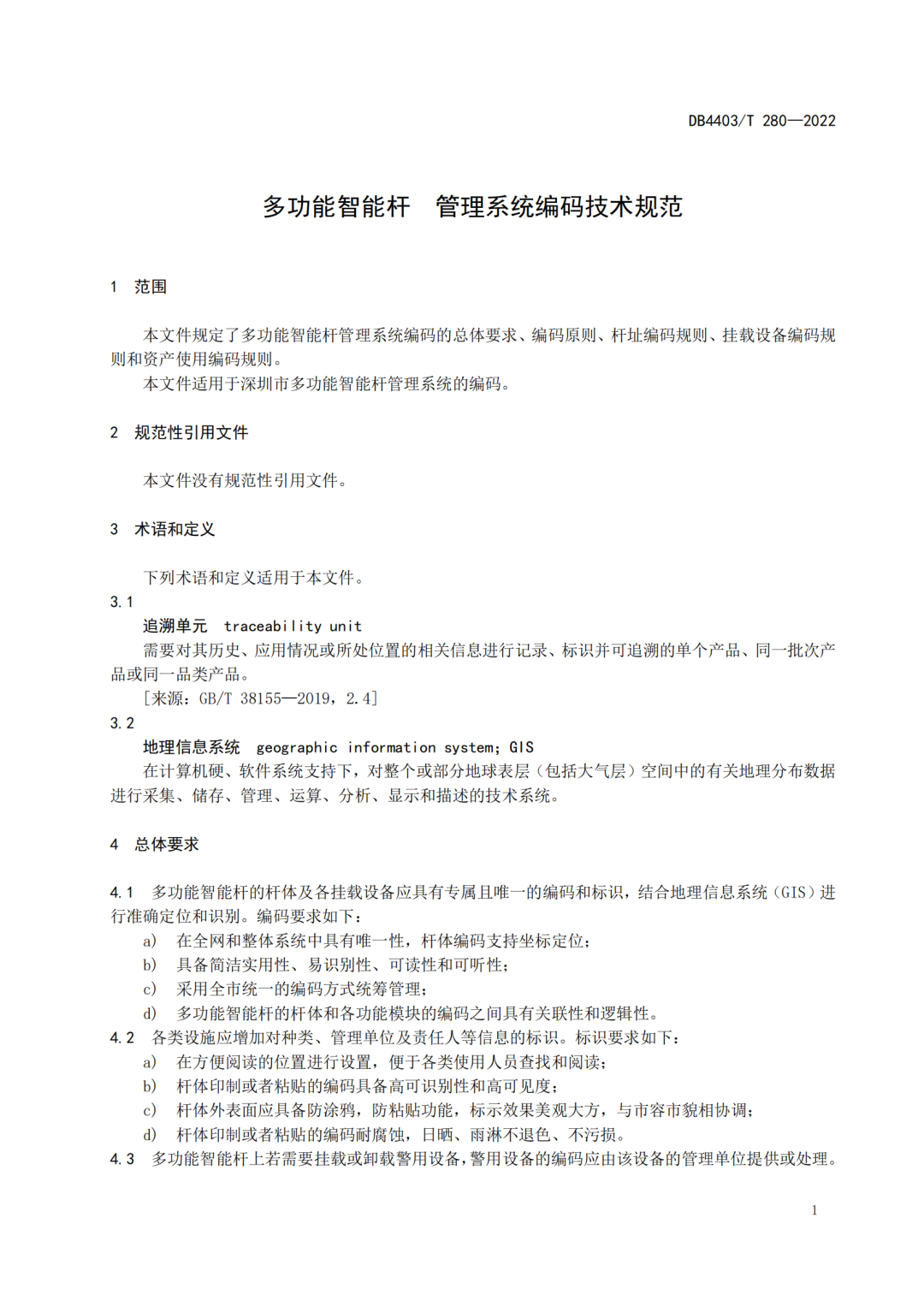
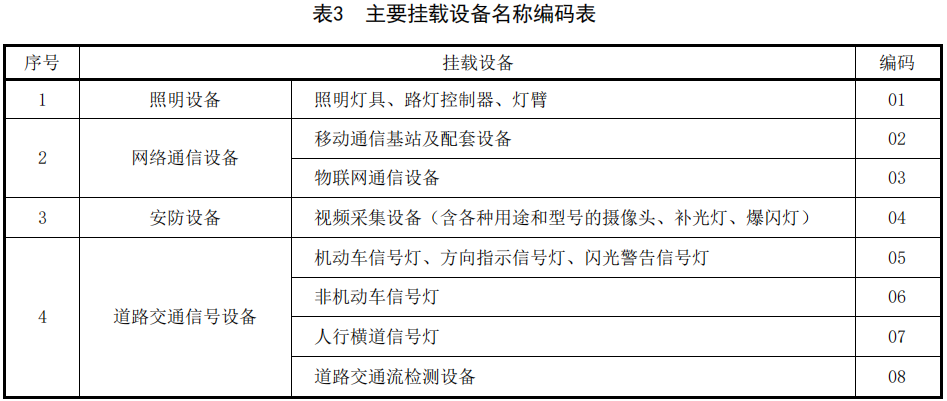
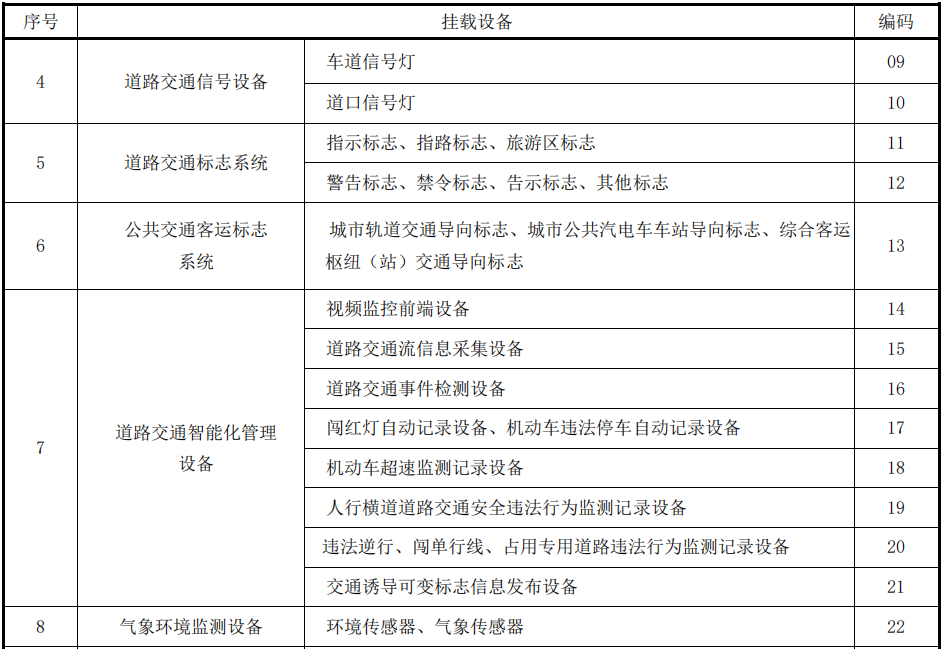
The poles and all mounted equipment of multi-functional smart poles shall have exclusive and unique codes and identifiers, combined with Geographic Information Systems (GIS) for accurate positioning and identification. This standard specifies the general requirements for coding of the multi-functional smart pole management system, coding principles, pole site coding rules, mounted equipment coding rules, and asset usage coding rules, applicable to the coding of the multi-functional smart pole management system in Shenzhen.
The Shenzhen Market Supervision Administration also provided an interpretation of this standard, pointing out that the numbering of street lights is open to the public, not only applicable to public security organs but also to traffic, urban management, medical, emergency services departments, and can better meet the needs of ordinary people in daily life. The pole site coding in the multi-functional smart pole management system adopts the coding rules of the Shenzhen public security system to achieve compatibility between the two systems.
↓↓↓

I. Background of Formulation
Standards are basic technical elements that constitute a nation's core competitiveness and an important technical system for regulating economic and social development. General Secretary Xi Jinping proposed: 'Standards determine quality; the quality depends on the standards, and only high standards yield high quality.'
Currently, the construction and development of smart cities are progressing rapidly. As an emerging urban public facility in recent years, the smart multifunctional pole integrates various urban infrastructure and new facilities, merges multiple urban functions, and utilizes information and communication technology to sense, analyze, and integrate key information from the urban operation system, achieving the intelligence of urban services and management. It is an important carrier of smart cities. In recent years, with the rapid development of 5G technology and the acceleration of new infrastructure construction, the construction of smart multifunctional poles is flourishing nationwide. Various regions have issued relevant construction standards. However, at this stage, there is still a lack of unified national specifications for smart multifunctional poles, particularly regarding functional design and operational management where no relevant standards exist yet.
深圳市公安局 2009 年 5 月开发了《利用路灯杆设置报警定位标志技术》,其主要目的是寻求缩短群众报警和定位时间的解决办法,曾设想自行在路面上树立专门的标志杆,通过编号使其具备定位功能。在排除了多种成本过高、施工难度较大的解决办法后,决定借助先进的 GPS 和 GIS 技术,将全市主要街道上的路灯杆进行统一编号,采取其 GPS 定位信息,与警用地理信息系统有机结合。同时,还在偏僻地点利用电线杆、桥墩、墙面、柱子等介质上按照路灯杆编码标准进行了补充编号和喷涂。报警人报警时只需说出身边的路灯杆编号,该路灯杆的位置便立刻显示在公安指挥中心的电子地图上,处警民警即可指挥离报警位置最近的警力前往处警,大大缩短了接处警时间。
Setting up alarm positioning signs on street light poles , this initiative, characterized by 'new ideas, low cost, and high benefits', has received high praise from all sectors of society in Shenzhen. It is hailed as the safety code for people's lives and acclaimed as a 'people-centric project' exploring modern urban management and services. A renowned professor commented: "The 'street light pole alarm positioning sign' is a concrete manifestation of building a service-oriented government that puts people first, representing an elevation of public service concepts."
The numbering of street light poles is open to the public; it can be applied not only by public security organs but also by traffic, urban management, medical, and emergency rescue departments, and can better meet the needs of ordinary citizens in daily life.
In summary, the pole site coding in the multi-functional intelligent pole management system adopts the coding rules of the Shenzhen public security system to achieve compatibility between the two systems.
II. Purpose and Significance
"Making cities smarter and more intelligent is the inevitable path to modernize the city governance system and governance capacity, with broad prospects." General Secretary Xi Jinping's speech points out the road and direction for future urban development.
Smart cities are a new model of urban development emerging under the rapid development of new-generation information technologies such as the Internet of Things, cloud computing, and big data. By achieving 'more thorough perception, deeper computation, and broader connectivity', they transform the ways in which things connect with things and people connect with things, alter our living environment, and profoundly change human thinking patterns and lifestyles.
Multi-functional smart poles include the pole body and its mounted sensing terminals (various devices and sensors). They are information infrastructure integrating smart lighting, video surveillance, traffic management, environmental monitoring, wireless communication, emergency assistance, and other functions. As an important component of new infrastructure construction and an entry point for smart city development, multi-functional smart poles also serve as carriers for future 5G base station deployment. By deeply integrating various urban resources, they achieve resource sharing, consolidation, and coordination, reduce urban construction costs, improve urban operation efficiency, and bring multiple benefits to the rapid development of urban governance.
On the morning of January 18, 2019, the seventh session of the sixth People's Congress of Shenzhen City opened. The mayor delivered the government work report to the conference. The government will supervise the implementation of 40 livelihood projects and once again proposed the requirement to "promote smart traffic control systems, smart parking, and multi-functional smart poles" in Shenzhen.
The development goal for the construction of multi-functional smart poles in Shenzhen is: by 2020, basically achieve full coverage of multi-functional smart poles on all major roads in the city. In the future, Shenzhen will invest in constructing more than 240,000 multi-functional smart poles. The construction and management of multi-functional smart poles will lay a solid foundation for the development of Shenzhen's smart city.
As a new type of infrastructure for the Internet of Things, multi-functional smart poles require huge investment and construction. It must be ensured that they are scientifically and reasonably designed , reducing construction costs in the early stage and avoiding repeated construction and renovation in the later stage as much as possible. The pole body and mounted equipment are the main components of multi-functional smart poles and also key factors in their management and operation and maintenance. They constitute the material basis for enterprise core technologies. To ensure the integrity of assets in the multi-functional smart pole management system, fully leverage the efficiency of equipment assets, improve production technology and equipment levels, and enhance economic benefits, it is necessary to strictly implement the coding rules for the multi-functional smart pole management system.
III. Main Content
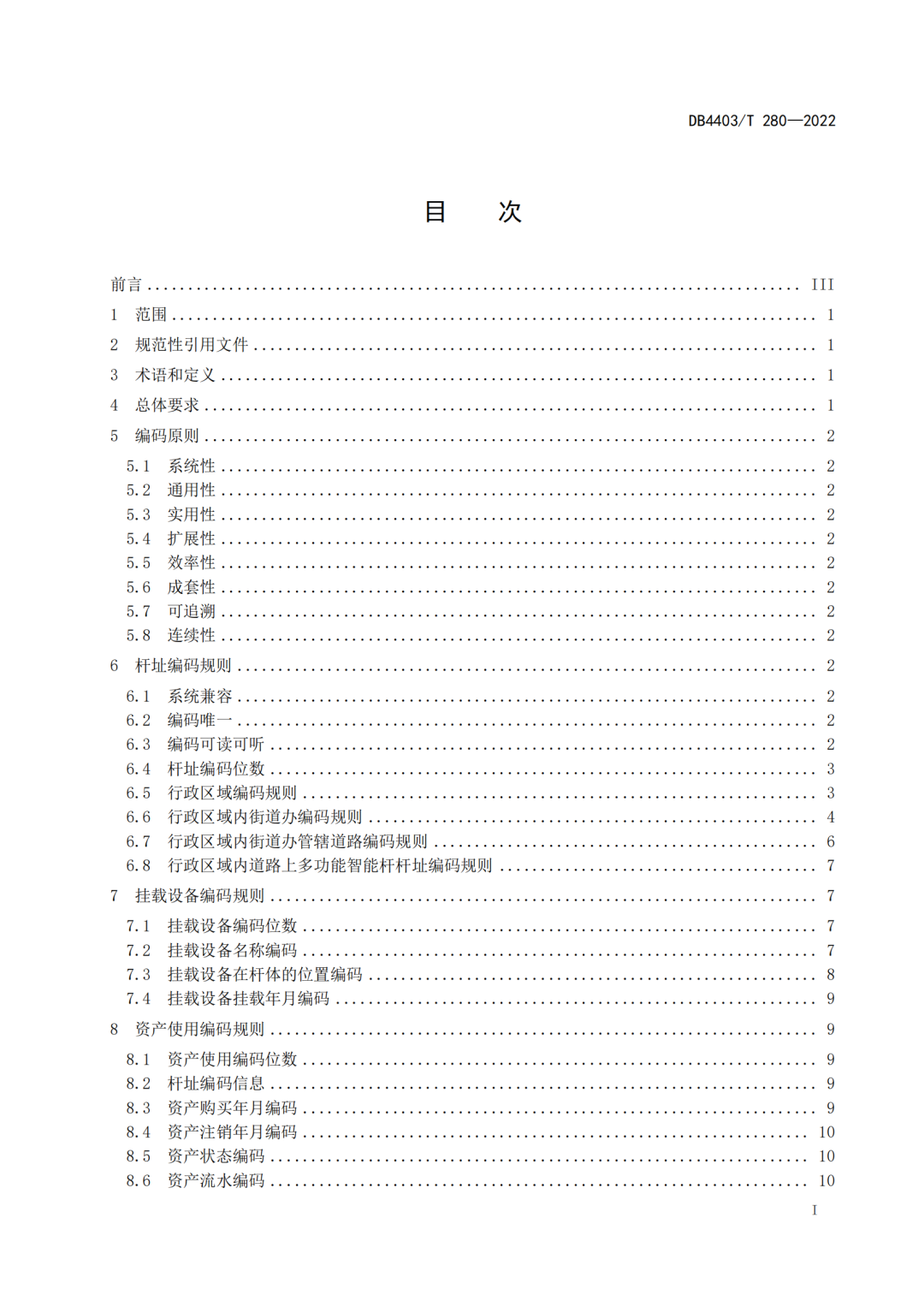
This standard includes 7 chapters: Scope, Normative References, Terms and Definitions, General Requirements, Coding Principles, Pole Site Coding Rules, Mounted Equipment Coding Rules, and Asset Usage Coding Rules.
General requirements for coding:The pole body of a multi-functional intelligent pole and each mounted device shall have exclusive and unique codes and identifiers, combined with Geographic Information Systems (GIS) for accurate positioning and identification; various facilities shall be marked with information such as type, management unit, and person in charge; if police equipment needs to be mounted or unloaded on a multi-functional intelligent pole, the code for the police equipment shall be provided or processed by the managing unit of that equipment.
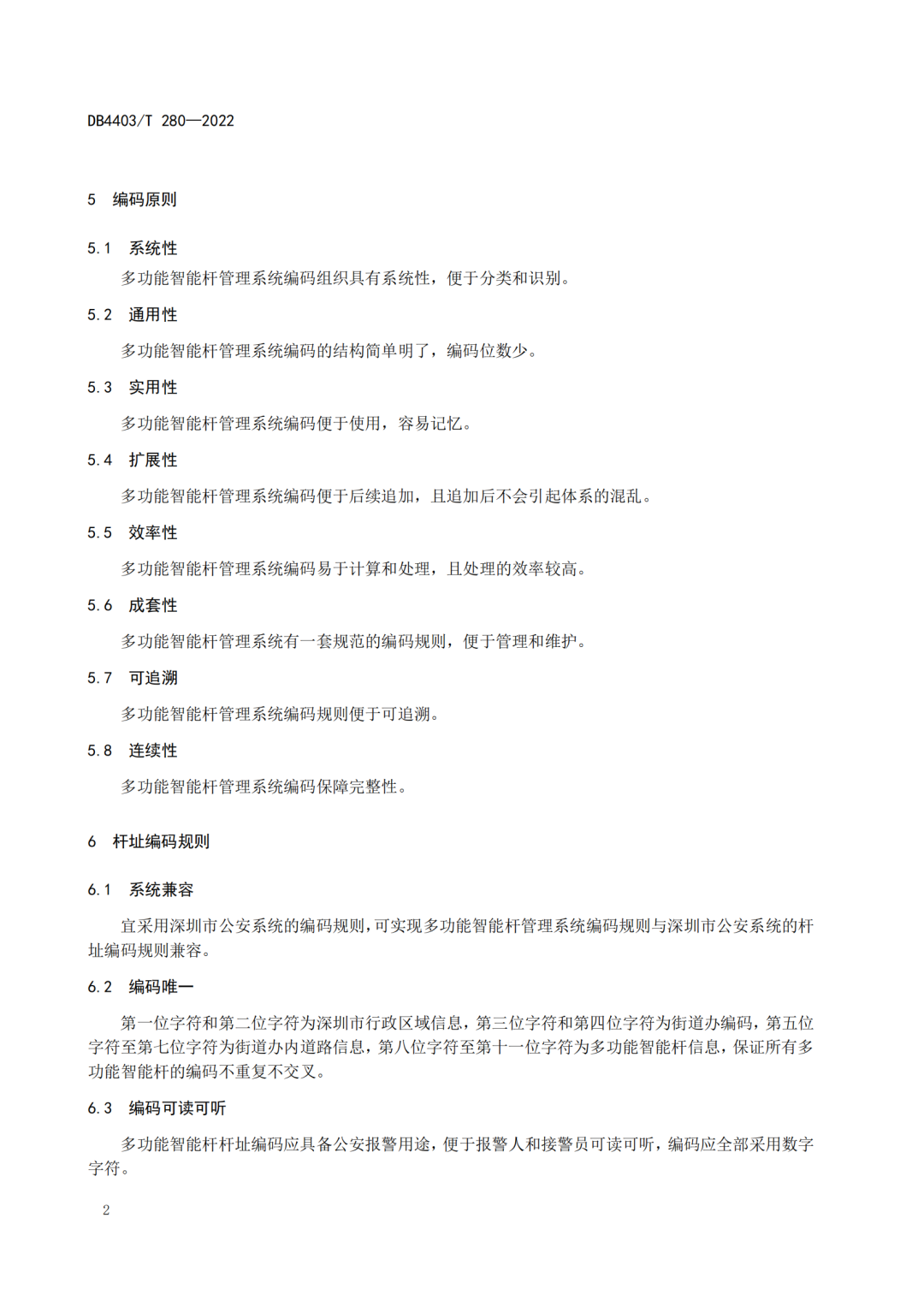
Coding principles include:Systematic, universality, practicality, scalability, efficiency, completeness, traceability, continuity.
In accordance with the spirit of the "Shenzhen Multi-Functional Intelligent Pole and Supporting Facilities Management Measures (Draft for Public Comment)", the numbering of street lights is open to society, not only applied by public security organs but also by traffic, urban management, medical, emergency services departments, etc., and can better meet the daily needs of ordinary people. The pole site coding in the multi-functional intelligent pole management system adopts the coding rules of the Shenzhen public security system to achieve compatibility between the two systems.
The specific coding rules are as follows:
It is recommended to adopt the coding rules of the Shenzhen Public Security System to ensure compatibility between the two systems.
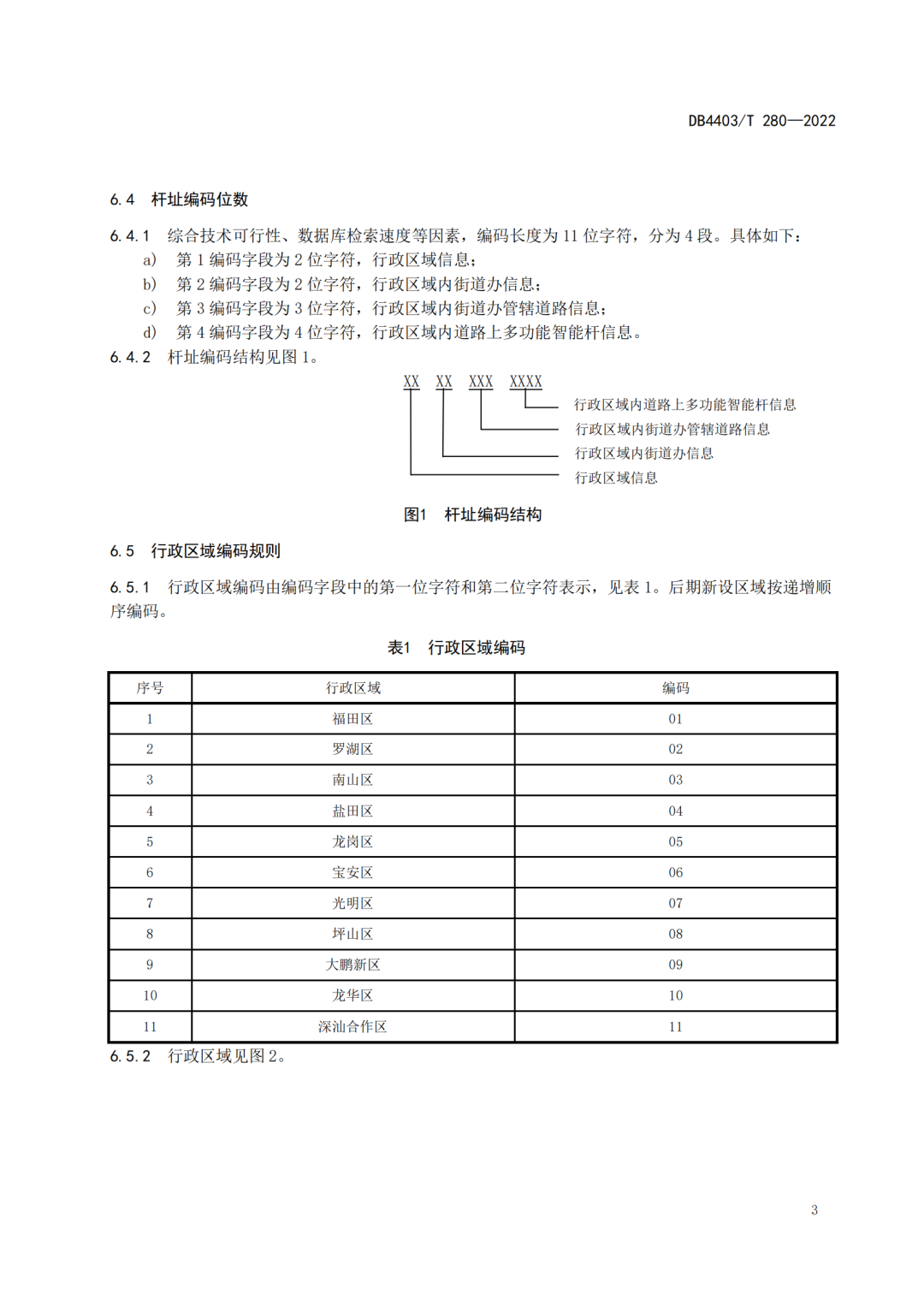
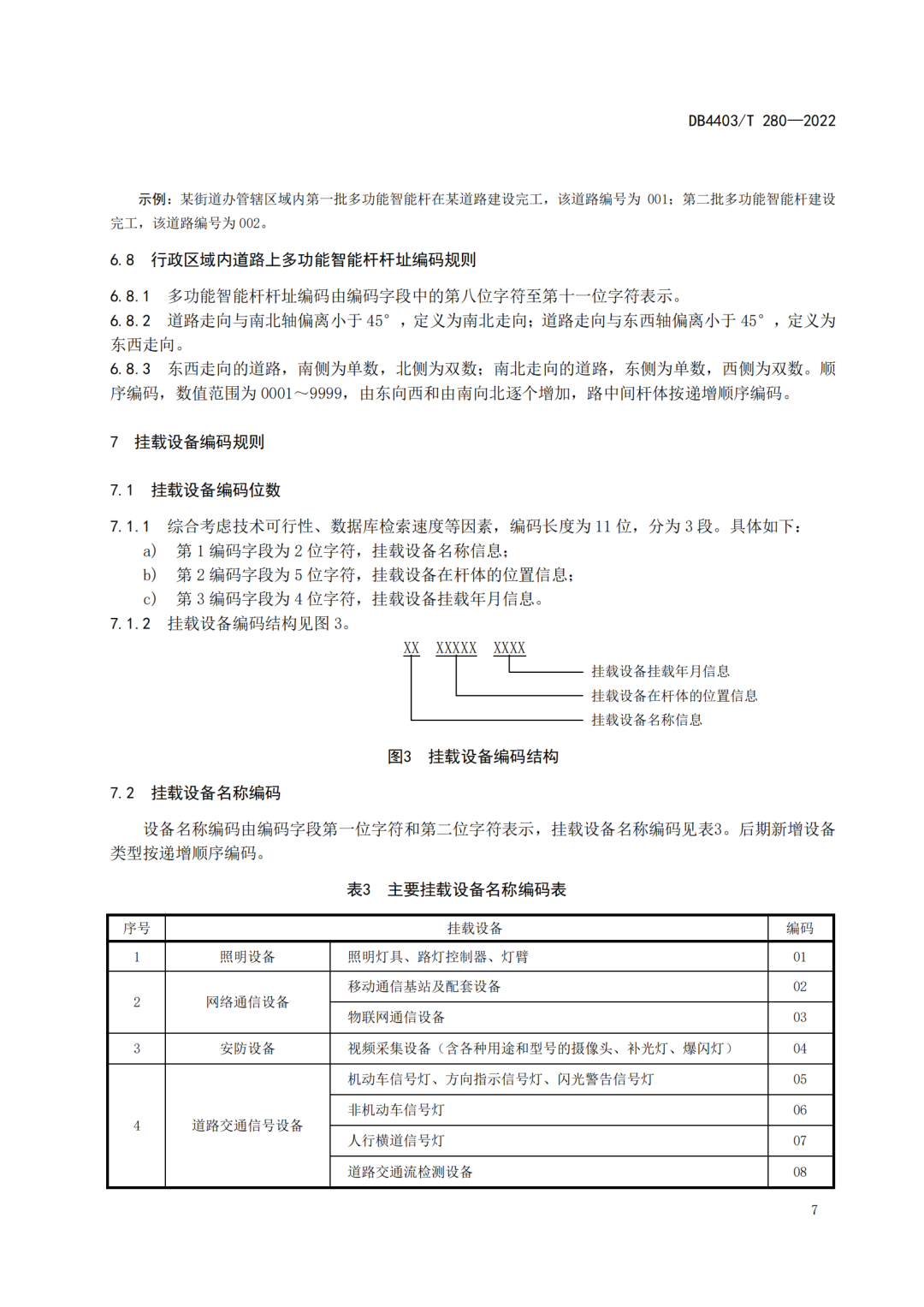
The first and second characters represent administrative region information for Shenzhen; the third and fourth characters represent street office codes; the fifth to seventh characters represent road information within the street office; the eighth to eleventh characters represent multi-functional intelligent pole information, ensuring that all multi-functional intelligent poles have unique, non-overlapping codes.
Multi-functional intelligent pole site codes should be suitable for public security alarm purposes, making them readable and audible for both callers and dispatchers; all codes must use only numeric characters.
Considering comprehensive technical feasibility, database retrieval speed, and other factors, the code length is 11 characters, divided into 4 segments.
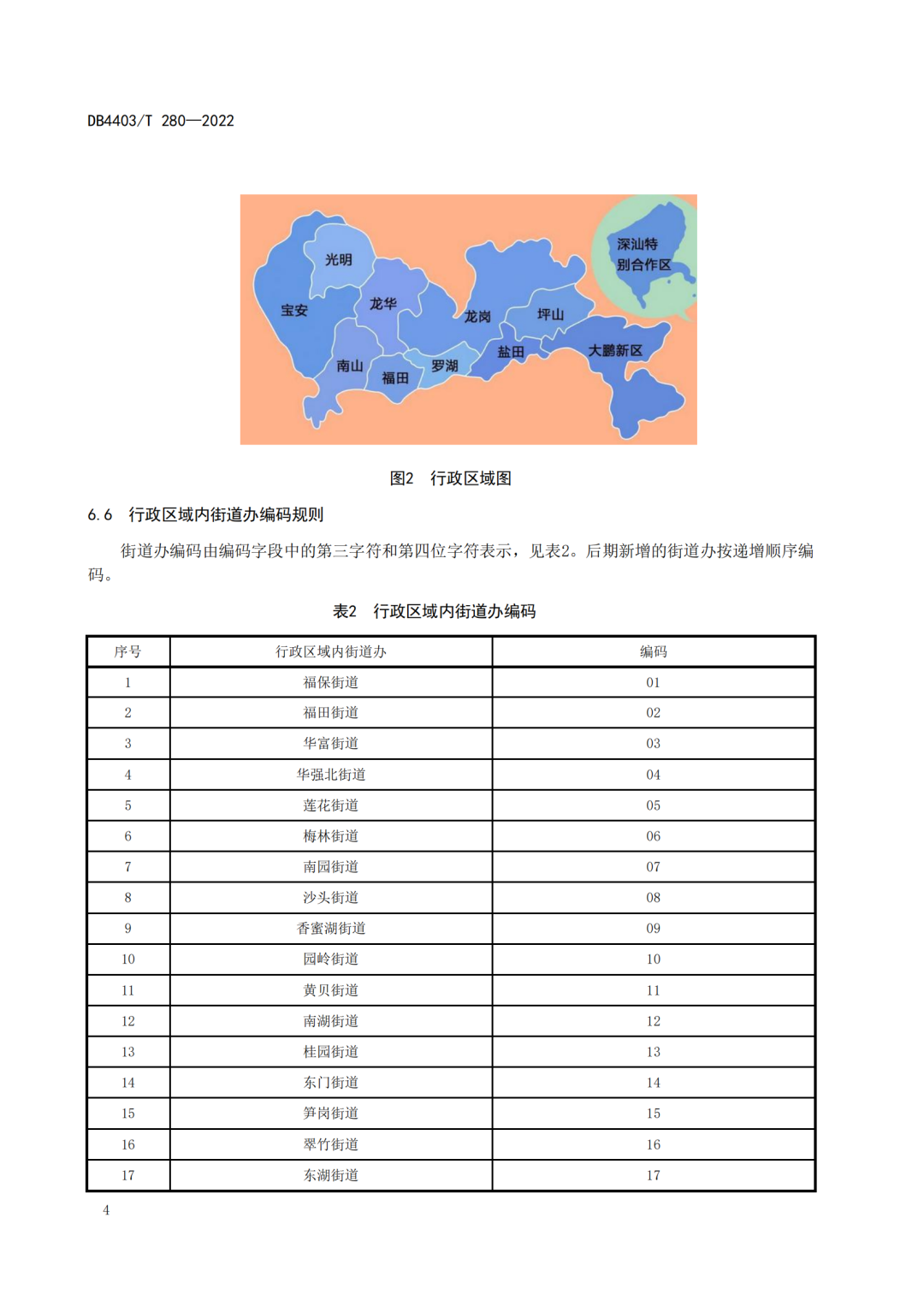
Administrative area codes are represented by the first and second characters in the code field, as shown in Table 1. Newly established areas are coded in ascending order later on.
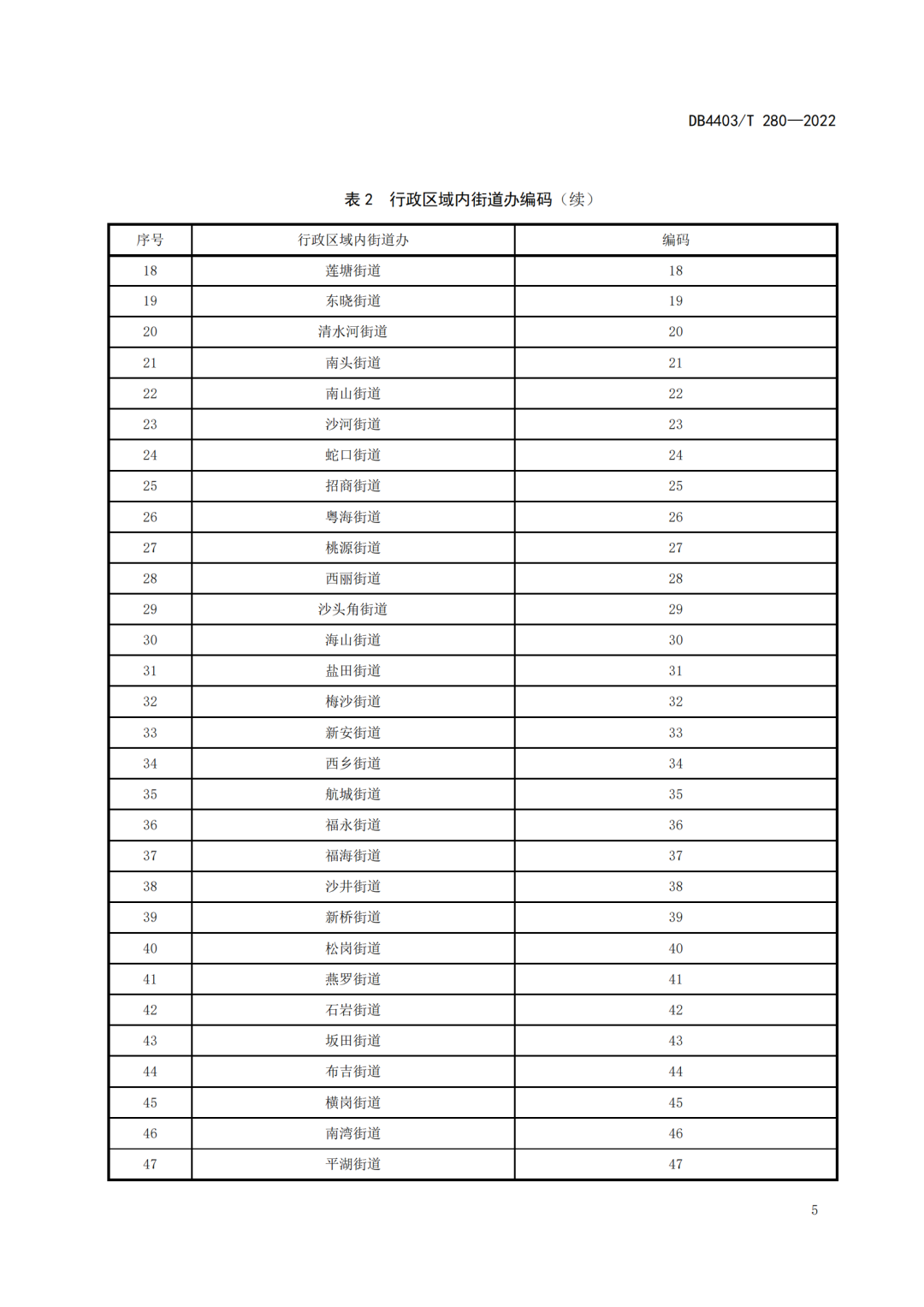
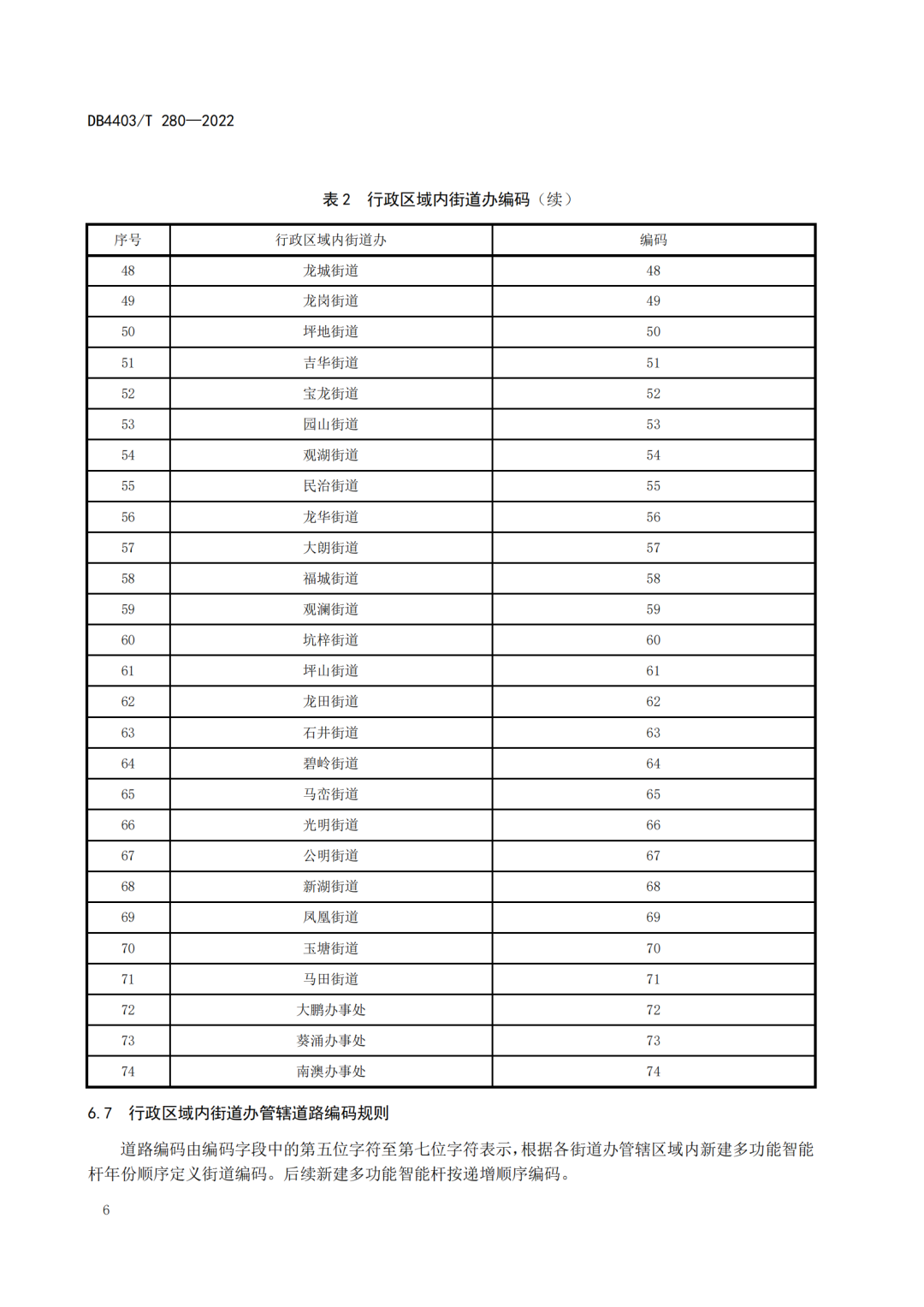
Subdistrict office codes are represented by the third and fourth characters in the code field, as shown in Table 2. Newly added subdistrict offices are coded in ascending order later on.
Road codes are represented by the fifth to seventh characters in the code field. Street codes are defined based on the year of construction of new multi-function smart poles within the jurisdiction of each subdistrict office. Subsequent new multi-function smart poles are coded in ascending order.
Multi-function smart pole site codes are represented by the eighth to eleventh characters in the code field.
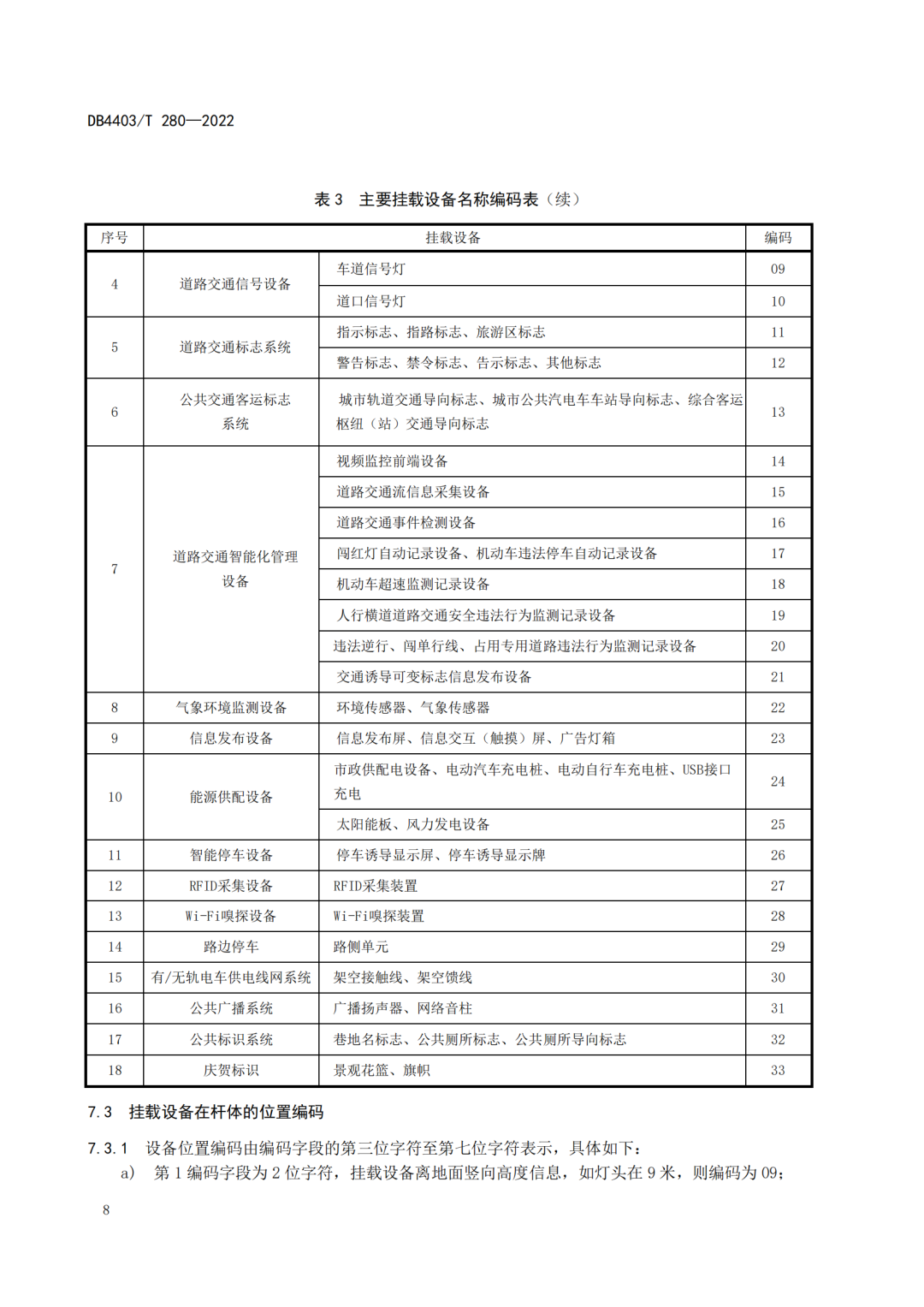
Considering technical feasibility, database retrieval speed, and other factors, the code length is 11 digits, divided into 3 segments.
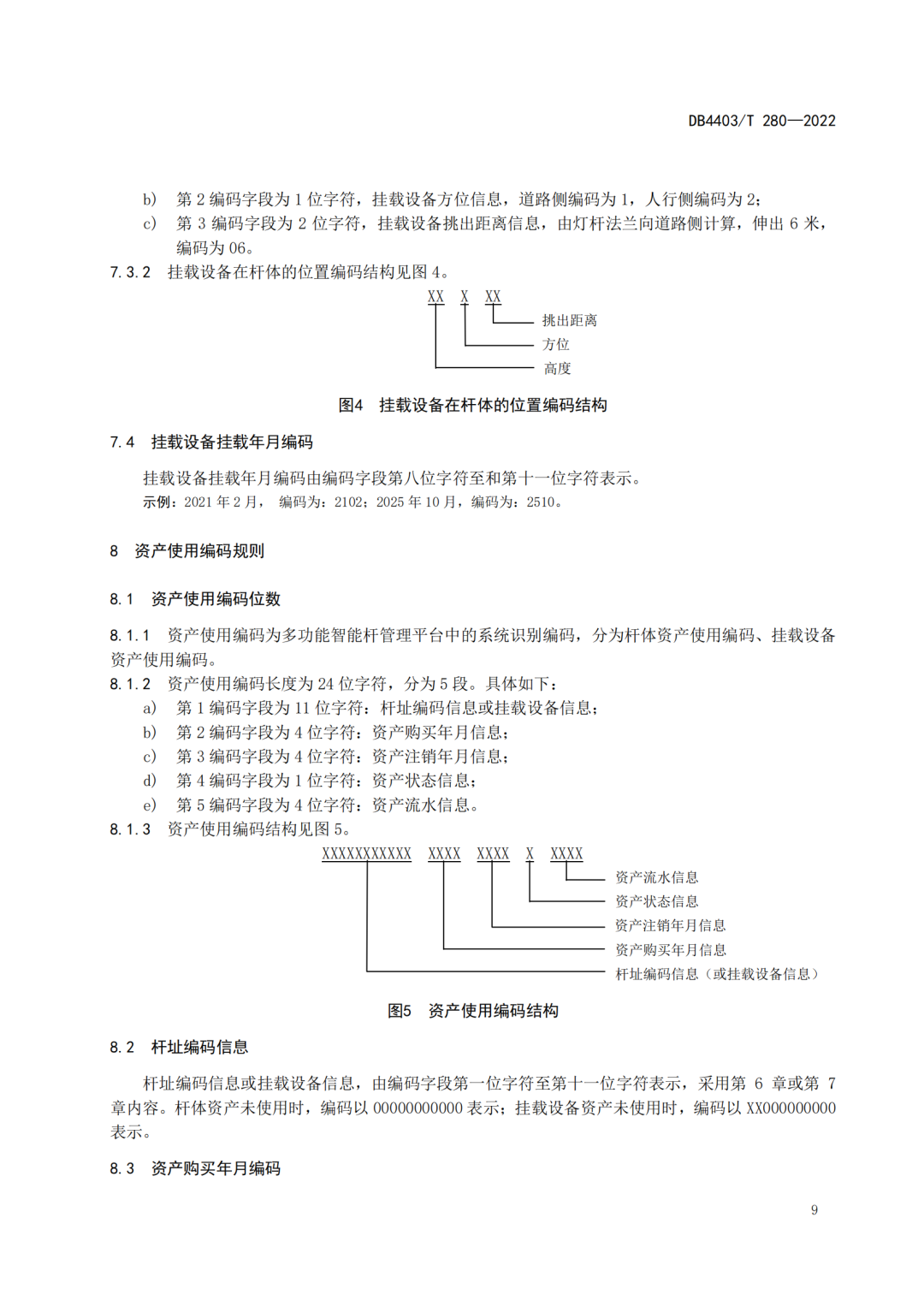
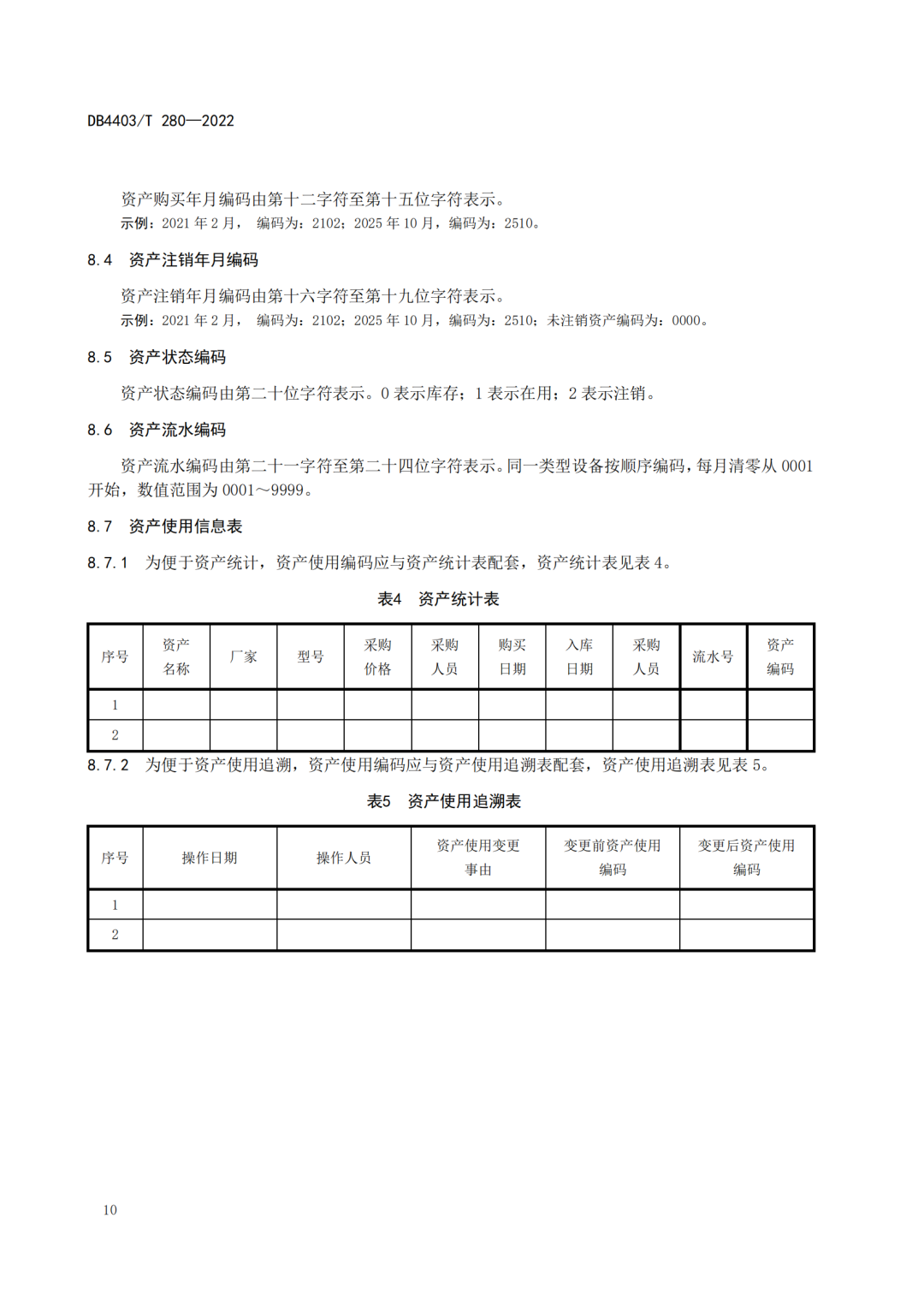
Asset usage code length is 24 characters, divided into 5 segments.

↓↓