
Application of Semiconductor Functional Public Lighting at Hefei Luogang Airport
The first decade of the 21st century was a period of rapid development for China's semiconductor lighting industry. The state listed the semiconductor lighting industry as a strategic emerging industry for key development, and a series of major scientific research projects and support policies were introduced successively. Domestic semiconductor lighting enterprises showed a trend of multi-polarized development, with continuous breakthroughs in key semiconductor lighting technologies, constantly improving R&D strength, and growing production scale. Many core key technologies are at a leading level domestically. In terms of functional lighting, phased breakthroughs have also been achieved, forming a relatively complete innovation industry chain and technological innovation chain.
In terms of market application promotion, the state issued a series of financial support policies and conducted a series of explorations in promotion and application. In 2009, the Ministry of Science and Technology issued the "Ten Cities, Ten Thousand Lamps" implementation plan to promote energy-saving pilots in major cities across the country. However, the application fields were relatively narrow, mainly applied to road lighting, with less application in large comprehensive venues, mainly due to the following aspects: First, large comprehensive venues have higher requirements for lighting; second, large comprehensive venues have higher requirements for the product quality and various performance parameters of semiconductor lighting products. Therefore, in China, the use of semiconductor lighting products in large venues is relatively small and is still in a stage of continuous exploration.
Hefei Luogang Airport undertakes busy ground service work for air transportation, receiving a large number of travelers from south to north every day. The Terminal Management and Operation Department is responsible for managing and operating the terminal building and its related supporting facilities, engaging in civil aviation ground passenger transport production, and providing aviation ground services.
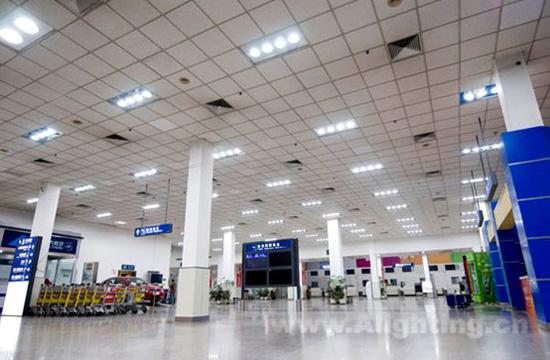
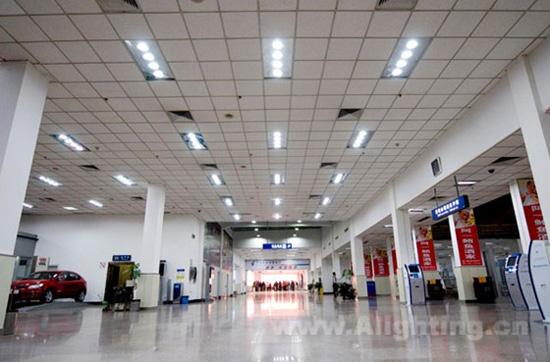
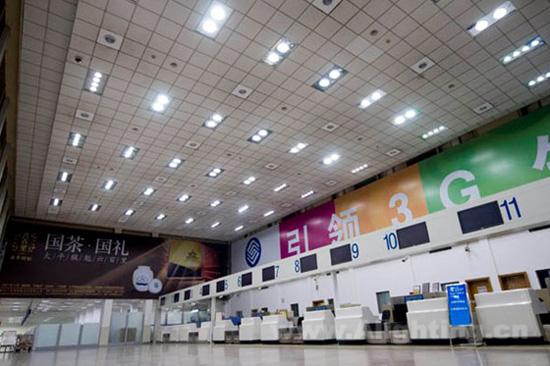
The terminal building has two floors. The first floor features functional areas such as the pre-inspection hall, domestic/international ticketing halls, domestic/international arrival halls, and remote stand waiting halls. Service facilities include ticket offices, tea lounges, post offices, banks, and shops. Units and departments operating on the first floor include security screening, public security, China Eastern Airlines, cleaning companies, advertising companies, border inspection, customs, health quarantine, and animal and plant quarantine. The second floor houses domestic flight waiting halls, international flight waiting halls, and first-class waiting halls, with services such as restaurants, tea lounges, bookstores, and comprehensive commercial counters. [NT:PAGE]
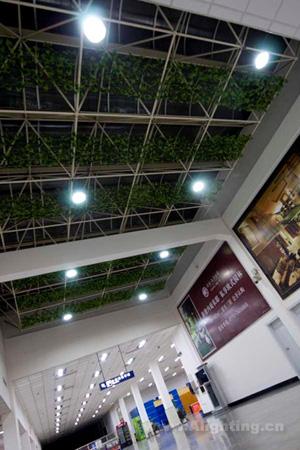
The airport waiting hall has a total of 2 floors, with 4,500 luminaires (each containing three 20W energy-saving tubes and three 9W ballasts), with a total power of 69W per luminaire. Each luminaire operates for 18 hours per day, resulting in a daily total energy consumption of 5,589 kWh and an annual total energy consumption of 2.04 million kWh.
All have now been replaced with Yunlong Technology semiconductor functional lighting luminaires, each with a power of 15W, saving 4,374 kWh of energy per day and 1.6 million kWh of energy per year.
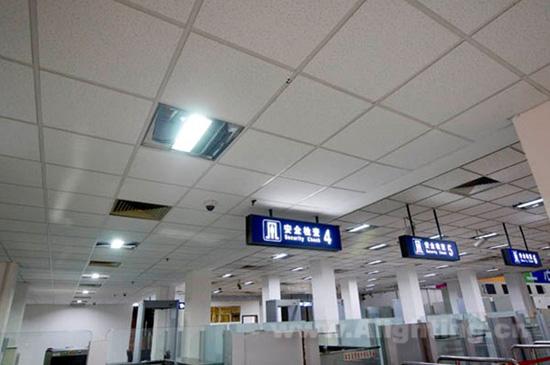
In 2009, Hefei Luogang Airport completed its overall semiconductor lighting energy-saving renovation. After the renovation, the overall lighting effect of the airport improved by 20%, the electricity saving rate reached 76%, and more than 1.6 million yuan in electricity fees were saved annually. The entire airport lighting environment was renewed. It is understood that this was the first large-scale semiconductor lighting energy-saving renovation in the aviation airport sector in China.
Anhui Yunlong Technology Development Co., Ltd., the enterprise undertaking this semiconductor lighting energy-saving renovation at Luogang Airport, faced various difficulties and pressures during the initial construction phase. On one hand, there were no precedents for the application of semiconductor lighting products in aviation airports in China, and it was also difficult to find cases abroad where semiconductor lighting products were used for energy-saving renovations. On the other hand, the company had accumulated considerable experience over several years in the field of semiconductor lighting. The indicators required for this lighting energy-saving renovation project were high, almost stringent. Furthermore, as this was the first time semiconductor lighting products were applied in an aviation airport in China, it received high attention from domestic peers and relevant government departments. However, Yunlong Technology regarded this lighting energy-saving renovation as a touchstone for the application of semiconductor lighting products, overcame various technical difficulties, and completed the lighting energy-saving renovation of Luogang Airport on schedule within three months, taking a step from hope to reality for airport lighting in China and filling the gap in the application of semiconductor lighting in China's aviation airports.